
Every career has a rhythm — a rise, a stall, a recovery. When that rhythm breaks, when the promotion doesn’t come or a job disappears overnight, the silence that follows can feel paralyzing. But a disrupted path isn’t the end of your professional story. It’s the rewrite. Rebuilding your career trajectory after a major setback isn’t about starting over; it’s about rediscovering the direction that still leads forward, but on wiser terms.
Rebuilding your career trajectory after a setback is about reflection, reinvention, and purpose. True recovery begins when you align new skills with self-awareness, turning disruption into design. Every challenge refines direction, proving that a resilient career grows stronger through clarity, confidence, and the wisdom gained from starting again.
The Reality of Professional Setbacks
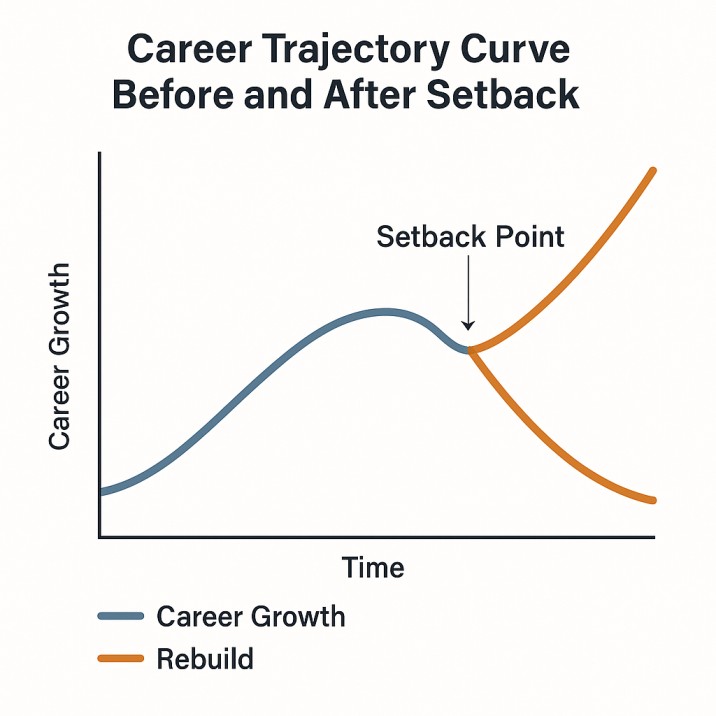
The modern work landscape moves fast — sometimes too fast for stability. A company restructuring, AI automation, or even a wrong turn in leadership can alter the slope of your career trajectory within weeks. The first step in rebuilding it is accepting that this interruption isn’t failure; it’s an adjustment point. A career, like a living system, evolves in cycles — growth, friction, reflection, and redefinition.
Those who thrive after setbacks often understand that a flattened career trajectory simply represents untapped potential. It’s the space between what was and what’s next. That space, though uncomfortable, is fertile ground for transformation.
The Emotional Architecture of Rebuilding
Before you redesign your career trajectory, you must understand its emotional foundation. Setbacks trigger loss — not only of income or title but of identity. That invisible pain often delays realignment more than any external factor.
In this period, clarity becomes your most valuable currency. Instead of rushing to replace what was lost, reflect on what the setback revealed. Did it expose burnout? A misaligned role? A company culture that muted your creativity? Awareness transforms the narrative from “I failed” to “I was redirected.” And that shift gives structure to your next ascent.
A resilient career trajectory doesn’t ignore vulnerability; it builds from it. Reframing emotions as data — signals that point to unmet needs — helps you design a path that fits your true pace, not just the market’s.
Turning Reflection Into Redirection
Rebuilding your career trajectory means translating introspection into motion. Reflection without redirection can trap you in analysis, but redirection grounded in insight becomes strategy. Begin by identifying your transferable strengths — not just the tasks you performed but the patterns you excel in. Perhaps your value wasn’t in managing campaigns but in translating complex goals into simple execution steps.
When you reframe experience around capabilities, you widen the horizon of possible futures. The modern career trajectory isn’t a ladder; it’s a landscape. Movement isn’t always upward — it’s sometimes lateral or even diagonal, leading to a position that better matches your evolving strengths.
A professional pivot doesn’t erase prior accomplishments; it repositions them. Employers increasingly value adaptability as much as expertise. So the very act of rebuilding your career trajectory becomes evidence of strategic agility — a trait highly prized in modern economies driven by change.
Investing in Reinvention
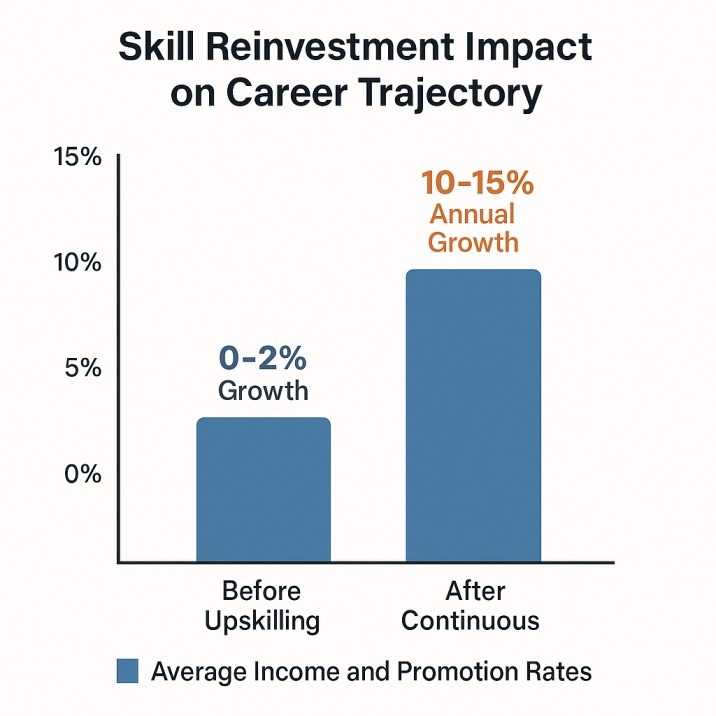
Once clarity returns, rebuilding your career trajectory requires investment — in skill, network, and self-trust. The digital economy rewards those who stay ahead of obsolescence, and this demands deliberate learning. A course in AI tools, data storytelling, or emotional intelligence may not immediately replace your old title, but it redefines your future relevance.
Each new skill functions like a compound interest deposit into your long-term career capital. When you layer new expertise on top of old experience, you transform yourself from a specialist into a strategist. Your career trajectory then shifts from reactive survival to proactive reinvention.
But the reinvestment isn’t purely academic. Relationships are your other currency. Reconnecting with mentors, former colleagues, or new communities isn’t just about opportunities — it’s about perspective. Others often see potential in you that you overlook during self-doubt. Let their vision recalibrate yours.
Reclaiming Professional Confidence
No career trajectory can recover without confidence, but confidence isn’t built through affirmation — it’s built through evidence. The evidence you need comes from small wins: projects completed, ideas recognized, feedback earned. Start where you are. If full-time roles aren’t available, freelance, consult, or volunteer in your field. Each action proves momentum, and momentum rebuilds identity faster than affirmation alone.
A temporary detour doesn’t define the path’s value. Many of the most influential careers in history — from executives to artists — were shaped not by uninterrupted success but by how they responded when the spotlight dimmed.
Remember: confidence is cumulative. Every act of effort, every conversation that sparks curiosity, every deliverable completed reignites the upward vector of your career trajectory.
The Power of Purposeful Alignment
Rebuilding isn’t just about regaining income; it’s about realigning purpose. A stable career trajectory grows from meaning, not merely momentum. When your values match your direction, work stops feeling like compensation and becomes contribution.
In this alignment phase, clarity replaces panic. You no longer chase titles or metrics but pursue resonance — the sense that your efforts connect with something larger than yourself. Ironically, this deeper alignment often accelerates tangible rewards, because authenticity fuels consistency, and consistency compounds credibility.
Organizations and leaders are increasingly searching for professionals who operate from inner clarity, not external pressure. When you articulate what you stand for, you magnetize opportunities that fit your new career trajectory rather than repeat the patterns that caused its earlier collapse.

The Rebuild as a Catalyst
Every broken pattern leaves clues. Every detour uncovers blind spots. The setback that felt destructive may, in hindsight, be the very disruption that protected you from stagnation. Your rebuilt career trajectory will not look like the original one — it will be more conscious, more resilient, more balanced.
Because once you’ve learned to construct progress from uncertainty, you no longer depend on perfect circumstances. You become adaptable in the truest sense — not as a reaction but as a strategy.
A major setback is the most honest teacher of endurance. It refines your patience, recalibrates your vision, and rewires your relationship with ambition. You emerge with sharper boundaries and broader understanding — the foundations of sustainable success.
Final Words
The truth about rebuilding a career trajectory is that the second climb always carries more wisdom. The first was about arrival; the second is about authorship. You now understand what equilibrium feels like — when ambition doesn’t drown peace, and growth doesn’t erase grounding.
The detour doesn’t disqualify you. It qualifies you — because resilience is the rarest credential in any profession. When you rebuild with self-awareness, the curve of your career trajectory steepens again, not out of desperation but design.
Your path isn’t broken. It’s becoming more precise.

Andrea Balint is a writer and researcher focused on human behavior, workplace psychology, and personal growth. Through her work at CareersMomentum, she explores how mindset, leadership, and emotional intelligence shape modern careers. With a background in communication and HR development, she transforms complex ideas into practical insights that help readers build clarity, confidence, and professional purpose.