
The question what is a human resources business partner has become central to understanding how modern organizations function. The traditional HR department once focused mainly on administrative tasks such as hiring, payroll, and compliance. But today, companies realize that human capital drives performance, innovation, and resilience. The Human Resources Business Partner (HRBP) sits at the intersection of people strategy and business outcomes, transforming HR from a support function into a strategic driver.
The HRBP role bridges leadership ambitions with workforce capabilities. Instead of merely managing personnel files, the HRBP designs frameworks that align employee performance with business objectives. This transformation demands a deep understanding of both human psychology and business analytics. So when we ask what is a human resources business partner, we’re essentially exploring how HR evolves into a core business function.
A Human Resources Business Partner bridges people and strategy. Unlike traditional HR roles, an HRBP collaborates directly with leadership to align workforce planning with business goals. The role blends analytics, culture design, and empathy, ensuring every decision balances performance and well-being. As work evolves, the HRBP becomes the architect of trust and transformation, proving that business growth begins with human connection.
The Evolution of HR: From Administration to Partnership
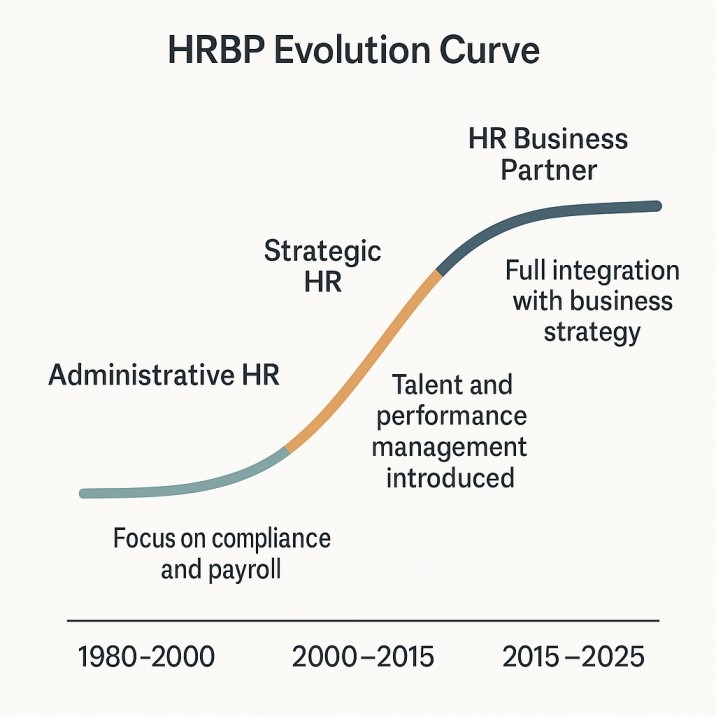
To fully grasp what is a human resources business partner, we must first look at how HR evolved. In earlier decades, HR was synonymous with personnel management — ensuring attendance, processing salaries, and maintaining compliance. As organizations grew complex, HR had to step up. It began addressing workforce planning, performance systems, and leadership development.
The HRBP role emerged from this shift. These professionals act as consultants to department heads, interpreting workforce data to guide better decisions. They connect business goals with people management, ensuring that every initiative — from talent acquisition to succession planning — reflects the company’s strategic direction.
Modern businesses can no longer afford reactive HR. The HRBP ensures proactive alignment: talent meets purpose, and people strategies support financial growth.
The Strategic Function of a Human Resources Business Partner
So, what is a human resources business partner in practice? It’s a professional who works directly with senior leaders to shape organizational direction. HRBPs don’t just execute orders — they influence decision-making. By analyzing workforce trends, they help forecast challenges like retention issues or skill gaps before they escalate.
Their responsibilities often extend into budgeting, restructuring, and culture transformation. In essence, they act as translators — turning human potential into measurable impact. When leadership plans a product launch or global expansion, the HRBP ensures the workforce is ready with the right skills, motivation, and alignment.
This requires both emotional intelligence and data fluency. HRBPs read engagement reports as closely as financial statements, understanding that morale directly affects profit margins. They know that culture isn’t an afterthought but a multiplier of performance.
The Human Side of Business Alignment
While business leaders often think in terms of revenue and metrics, HRBPs remind them that behind every graph lies human emotion. They navigate between empathy and efficiency — advocating for employees while ensuring business continuity. When leadership introduces a new policy, the HRBP anticipates employee reactions, communication needs, and engagement risks.
Therefore, understanding what is a human resources business partner means recognizing their dual role: strategic thinker and human advocate. They manage conversations about layoffs, reorganizations, and promotions with precision and care. Their approach often determines whether employees feel valued or expendable.
This emotional fluency is what distinguishes HRBPs from traditional HR managers. They are trusted advisors, not mediators. Their credibility stems from both competence and compassion.
Data and Analytics in HRBP Decision-Making
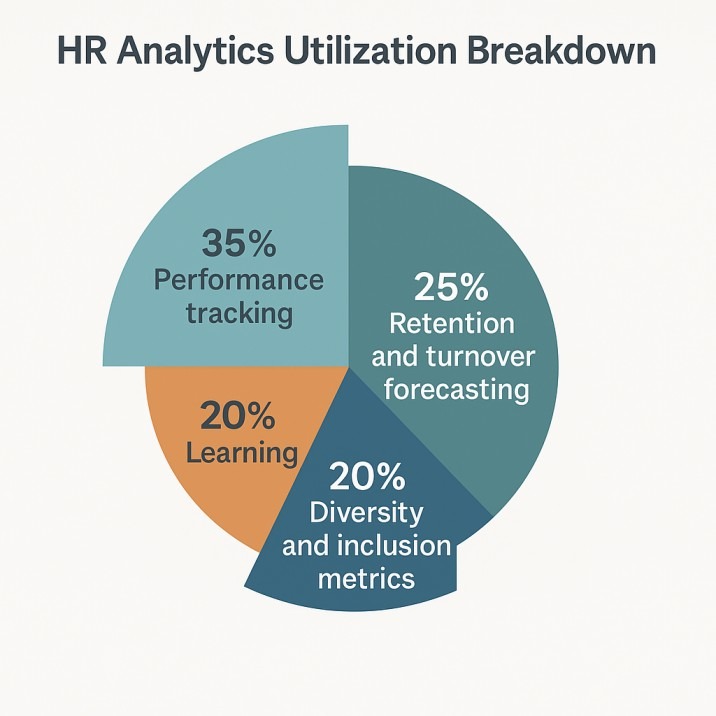
To modernize HR means to measure it. Data has become the HRBP’s second language. Through analytics, they identify performance bottlenecks, detect burnout trends, and model retention probabilities. The question what is a human resources business partner now includes data fluency as a core skill.
By leveraging HR software and predictive analytics, HRBPs create evidence-based strategies. For instance, they might notice that teams with weekly feedback sessions show 20% higher engagement. Or they may predict turnover spikes when compensation trails market benchmarks by 10%. These insights shape budget decisions and leadership coaching sessions.
Numbers, however, are not the end goal — context is. HRBPs translate analytics into meaningful narratives that inspire action. They turn dashboards into decisions.
Culture Building and Organizational Health
Culture is often described as “how things get done when no one’s watching.” HRBPs guard that culture fiercely. They partner with executives to maintain alignment between mission statements and daily behavior. Asking what is a human resources business partner also means asking who ensures company values remain more than words on a wall.
When an organization faces mergers, rapid hiring, or leadership changes, the HRBP becomes a stabilizing force. They communicate transparently, listen actively, and help teams adapt. Healthy cultures thrive on clarity and trust — both of which are core to the HRBP’s mission.
Strong culture doesn’t happen by accident. It’s engineered through intentional design: feedback systems, recognition programs, and shared accountability. The HRBP ensures that such frameworks exist and evolve continuously.
The Business Impact of HR Partnership
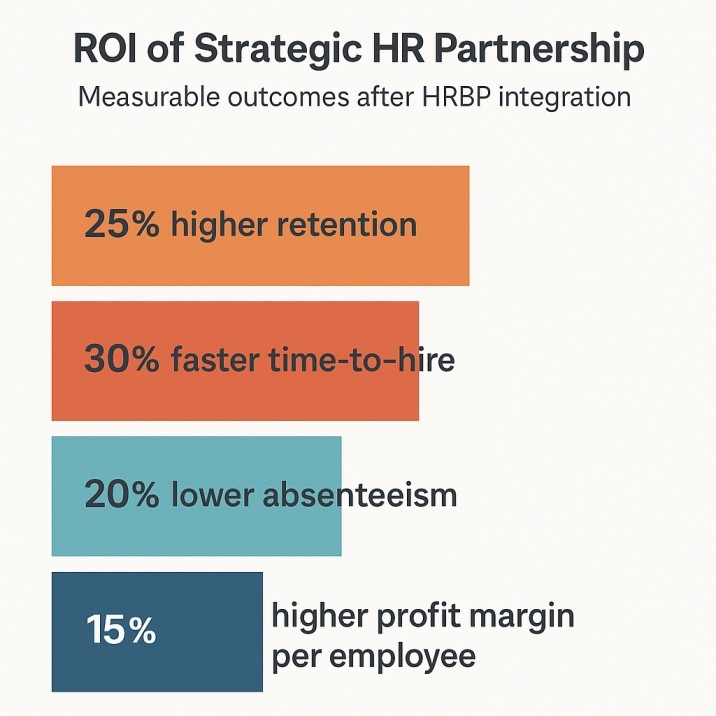
It’s easy to view HR as soft science, but HRBPs bring tangible results. Studies show that organizations with strategic HR functions outperform competitors by up to 25% in profitability and retention. So, what is a human resources business partner in measurable terms? They are growth multipliers.
They influence everything from revenue per employee to innovation speed. When HRBPs streamline talent pipelines, the business gains agility. When they reduce turnover, it protects institutional knowledge. When they promote well-being, it reduces absenteeism and healthcare costs. Their results are not merely human — they are financial.
This makes HRBPs indispensable in executive discussions. In fact, many HRBPs transition into Chief People Officer or COO roles, proving that understanding people equals understanding business.
The Future of the HRBP Role
As we look ahead, the role continues to evolve. Artificial intelligence, hybrid work, and mental health awareness redefine how HRBPs operate. Automation frees them from paperwork, allowing them to focus on strategy and empathy. The question what is a human resources business partner will soon expand to include digital fluency and ethical AI governance.
Tomorrow’s HRBPs will champion fairness in algorithmic hiring, guard against bias, and ensure employee well-being in virtual spaces. They will be architects of trust in increasingly automated workplaces.
Human adaptability remains the most valuable currency in business. And HRBPs are its primary stewards — ensuring technology enhances humanity, not replaces it.
Conclusion
Ultimately, what is a human resources business partner comes down to one idea: integration. The HRBP integrates strategy with empathy, data with dialogue, and business with humanity. They are not just HR professionals; they are organizational architects ensuring that every human effort aligns with purpose and profit.
In a world where employee engagement and organizational success are inseparable, the HRBP serves as the connective tissue that holds everything together. Their impact is both visible in metrics and invisible in morale. They prove that business growth doesn’t happen despite people — it happens because of them.

Andrea Balint is a writer and researcher focused on human behavior, workplace psychology, and personal growth. Through her work at CareersMomentum, she explores how mindset, leadership, and emotional intelligence shape modern careers. With a background in communication and HR development, she transforms complex ideas into practical insights that help readers build clarity, confidence, and professional purpose.