
Office gossip has existed for as long as workplaces have. It hides in conversations by the coffee machine, murmurs during meetings, or subtle exchanges in group chats. While it may appear harmless, office gossip carries an extraordinary ability to influence culture, trust, and productivity. It can build informal bonds or destroy reputations overnight. Understanding why it happens—and how to control it—reveals a lot about the emotional undercurrents that shape any organization.
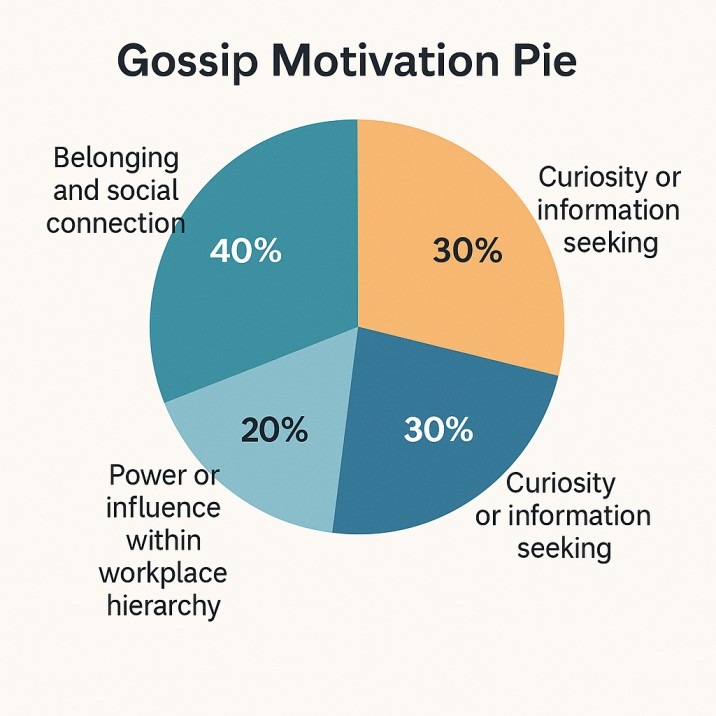
To understand office gossip, we must recognize that it is not just idle talk. It is a form of social currency. Employees trade information to gain acceptance, security, and power. Gossip offers a way to belong, especially in high-pressure environments where formal communication feels distant. When the emotional temperature rises, gossip becomes the relief valve through which frustration, curiosity, and insecurity escape.
Office gossip is more than small talk. It reflects the emotional pulse of an organization, shaped by curiosity and communication gaps. When leaders promote openness and empathy, gossip loses its destructive edge and turns into insight. Transparent dialogue builds trust, lowers tension, and transforms office gossip from harmful speculation into a healthy exchange of honest conversation.
The Psychology Behind Office Gossip
At its core, office gossip fulfills three human needs: connection, clarity, and control. In workplaces full of uncertainty, employees seek meaning behind every decision, every promotion, and every sudden policy change. When management communication feels unclear, employees fill the silence with speculation. That speculation turns into gossip, which spreads faster than official memos.
In psychological terms, gossip satisfies our need for narrative. People are storytellers by nature. Sharing information about others activates the brain’s reward system, creating the same chemical satisfaction we get from social validation. That’s why it feels difficult to ignore juicy details—it stimulates dopamine, making office gossip addictive.
But gossip doesn’t spread evenly. It thrives in environments where communication is opaque, trust is weak, or hierarchy suppresses feedback. The less employees feel heard, the louder gossip becomes. Paradoxically, when organizations try to silence it completely, it often mutates underground and becomes even more destructive.
How Gossip Starts and Gains Momentum
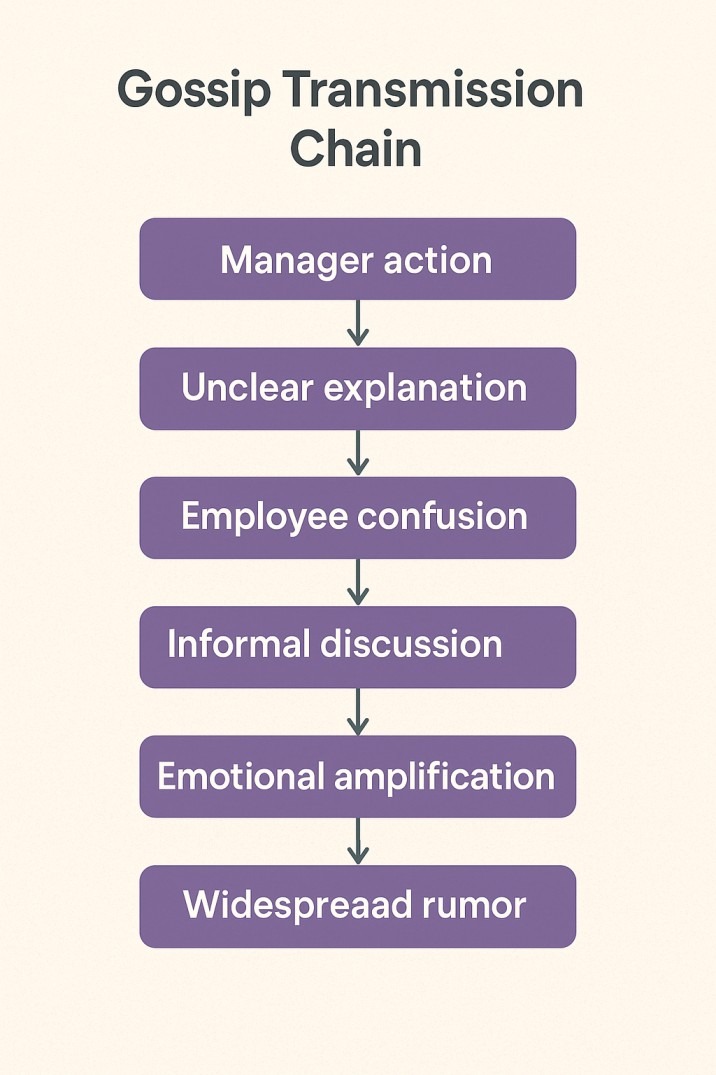
To understand the spread of office gossip, imagine a single spark inside a dry forest. A small comment, a misunderstood email, or an unconfirmed rumor can set an entire team ablaze with speculation. Once shared, gossip passes through social filters—each person adding emotional tone or exaggeration until the story barely resembles the truth.
Workplace architecture itself can amplify gossip. Open offices without clear communication channels breed overheard conversations and misinterpretations. Digital tools like Slack or internal chat rooms can accelerate the spread, turning what used to be whispers into viral threads.
Ironically, managers often underestimate how much informal communication guides perception. Employees interpret silence from leadership as secrecy, creating an informational vacuum that gossip fills instantly. Thus, office gossip becomes a form of “shadow communication,” providing the clarity that official statements fail to deliver.
The Dual Nature of Gossip: Harmful or Harmless?
It’s tempting to categorize all office gossip as toxic, but not every instance is destructive. Sociologists argue that gossip serves a regulatory function in groups—it reinforces norms, builds empathy, and exposes unacceptable behavior. When employees discuss a manager’s favoritism or a colleague’s achievement, they are, in essence, enforcing social fairness.
Positive gossip can strengthen relationships and increase transparency when it revolves around recognition or shared success. The problem arises when gossip becomes judgmental or exclusionary. Negative gossip distorts perception, leading to anxiety, mistrust, and fragmented teams. The real question isn’t whether gossip exists—it’s what kind of gossip dominates the environment.
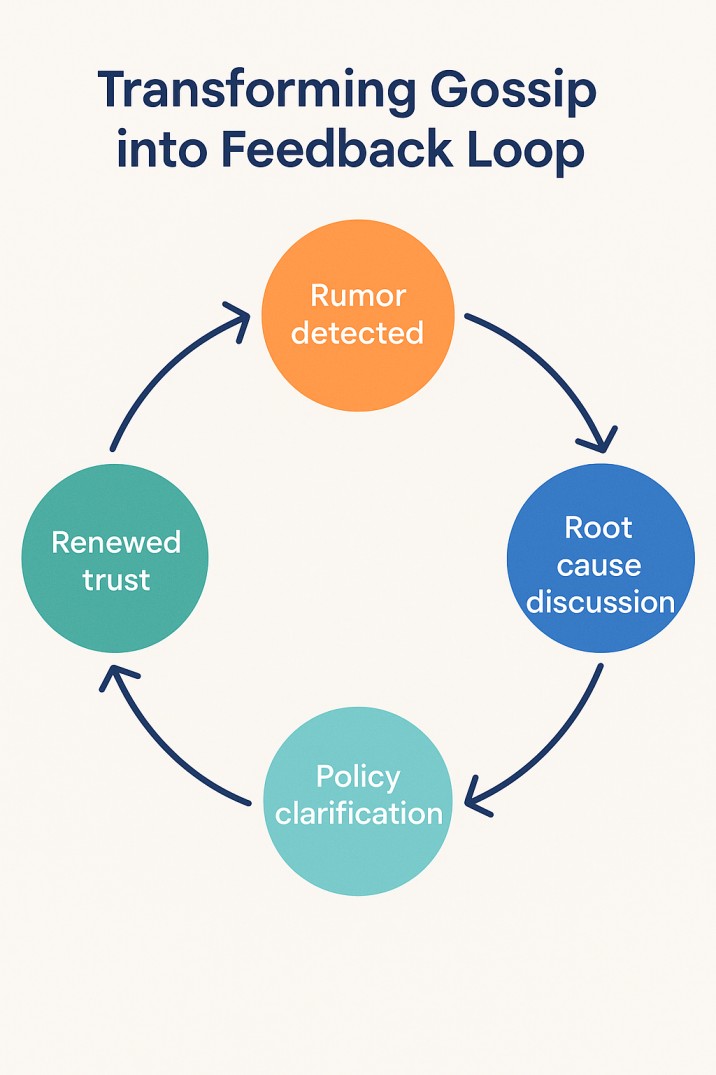
Healthy organizations transform gossip into feedback. Leaders who listen to what people whisper can uncover hidden tensions long before they explode publicly. Toxic leaders, on the other hand, dismiss gossip and therefore lose touch with the organization’s emotional reality.
Controlling the Spread: Communication as an Antidote
To control office gossip, you cannot simply ban it. You must out-communicate it. Transparency dismantles speculation. When employees feel informed, gossip loses its fuel source. Regular briefings, clear reasoning behind decisions, and authentic leadership presence neutralize the uncertainty that gossip feeds on.
Another powerful method is role modeling. When managers engage in gossip, it legitimizes it. When they redirect it toward constructive dialogue, it redefines social norms. Emotional intelligence becomes essential: leaders must detect not only what is said but why it is being said.
Organizations that invest in feedback culture experience less gossip because employees have safe spaces to express concerns openly. An effective HR team can spot gossip clusters—departments or individuals where rumors originate—and address the underlying causes, such as unclear policies or power imbalances,

The Emotional Costs of Gossip
Unchecked office gossip carries measurable emotional costs. Targets of gossip often suffer stress, sleep disturbances, and decreased engagement. They become cautious in collaboration and start withholding ideas for fear of judgment. This “trust tax” quietly drains innovation from teams.
Even those spreading gossip pay a psychological price. When the culture revolves around speculation, people become hyper-vigilant, wondering what others say about them in return. The result is a perpetual cycle of defensiveness and distance.
In some workplaces, gossip becomes a substitute for connection. Employees who crave social warmth use gossip as emotional bonding, even if it harms someone else. It’s a temporary sense of closeness built on someone else’s absence. Recognizing this pattern is the first step toward emotional maturity at work.
Reframing Gossip into Constructive Dialogue
Transforming office gossip into productive communication requires subtlety. Instead of policing conversations, leaders should invite dialogue. When employees feel heard, gossip loses its secretive allure. HR initiatives like “Ask Me Anything” sessions, anonymous feedback tools, and open office hours help move conversations from corridors to conference rooms.
Leadership transparency, paired with vulnerability, is powerful. When managers admit uncertainty or acknowledge mistakes, employees stop assuming and start trusting. The mystery disappears, and gossip dissolves naturally.
Encouraging recognition also redirects energy. When people are praised openly, there’s less need to discuss achievements behind closed doors. Recognition culture transforms what used to be private admiration or jealousy into shared celebration.
The Role of HR in Gossip Management
Human resources departments serve as both observers and architects of workplace communication. When HR teams analyze the tone of office gossip, they gain insight into cultural health. Persistent negative gossip may signal leadership disconnect, inequality, or burnout.
HR professionals can also establish behavioral standards that balance free speech with respect. Trainings on empathy, emotional intelligence, and ethical communication reshape how people share information. They teach employees the difference between discussion and defamation.
Crucially, HR can use data to track engagement metrics related to gossip. Anonymous surveys can measure trust and transparency levels across teams, allowing early intervention. When HR becomes proactive, gossip becomes diagnostic, not destructive.
Conclusion
So, office gossip is not a workplace parasite—it’s a reflection of unspoken needs. It thrives where information is scarce and dies where dialogue is abundant. Instead of fearing it, organizations should study it. Gossip exposes weak communication structures, power imbalances, and emotional gaps. When managed wisely, it becomes feedback rather than friction.
The challenge isn’t to eliminate office gossip but to evolve beyond it. When leadership commits to openness, empathy, and fairness, the whispers fade into conversations worth having. The moment employees feel seen and heard, gossip loses its power—and authenticity takes its place.

Andrea Balint is a writer and researcher focused on human behavior, workplace psychology, and personal growth. Through her work at CareersMomentum, she explores how mindset, leadership, and emotional intelligence shape modern careers. With a background in communication and HR development, she transforms complex ideas into practical insights that help readers build clarity, confidence, and professional purpose.