
Every office hums with the same question — why do some people seem to glide through their tasks while others wrestle with time? The answer often hides behind a single concept: peak productivity. It’s not about clocking longer hours or sacrificing weekends. It’s about understanding how your energy, focus, and environment align to produce exceptional output with less friction.
In the modern workplace, peak productivity is a blend of rhythm, mindset, and intelligent self-management. It’s what happens when skill, clarity, and energy intersect — the moment when you’re so immersed in work that progress feels effortless. This state doesn’t appear by accident; it’s cultivated by people who know how to balance ambition with recovery, attention with reflection, and technology with intention.
Peak productivity is the natural balance between focus, energy, and rhythm. It emerges when mental clarity, emotional stability, and physical environment align to create effortless performance. Instead of chasing hours, true professionals master biological cycles and mindful recovery to sustain consistent flow. Peak productivity transforms routine effort into inspired progress, proving that doing less with intention often achieves far more.
The Psychology of Focus and Flow
At the heart of peak productivity lies focus — that rare mental state when distraction fades and creativity amplifies. Psychologists call it the “flow state,” where one’s sense of time bends, and every task feels both challenging and rewarding. Achieving it depends on aligning internal motivation with external clarity.
When your goals are concrete, your brain reduces cognitive friction. You stop second-guessing your next move and instead invest mental energy into execution. This doesn’t mean working harder but working in harmony with how the brain naturally operates. The prefrontal cortex, responsible for decision-making and complex thought, thrives on structure and clear intent. When cluttered with uncertainty, it falters. When guided by clarity, it performs at its sharpest.

Energy as the True Currency of Work
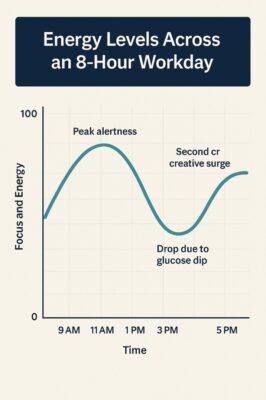
We often assume productivity is a time issue — but peak productivity depends more on managing energy than minutes. You can’t schedule creativity or force focus when depleted. The most successful professionals learn to ride their energy waves instead of fighting them.
Your body has ultradian rhythms, natural cycles of energy that peak and dip every 90–120 minutes. Ignoring these signals by powering through fatigue leads to diminishing returns. Respecting them, however, lets you sustain performance across the day. Taking short, intentional breaks, moving your body, or stepping into natural light resets your focus levels far better than caffeine ever could.
Environment Shapes Efficiency
The workplace itself plays a silent yet dominant role in peak productivity. Lighting, air quality, noise levels, and even desk arrangement affect cognitive performance. Open offices, though designed for collaboration, often breed interruptions that scatter attention. A well-structured workspace, on the other hand, nurtures concentration and flow.
Minimalism in the physical environment translates to minimalism in mental processing. A cluttered desk competes for cognitive bandwidth. Simple visual cues — like plants, natural light, or organized work surfaces — can increase perceived calm and mental control. The environment becomes a silent partner in your quest for peak productivity, amplifying mental clarity through sensory alignment.
Technology: Amplifier or Distraction?
Digital tools can either elevate or erode peak productivity. Used intentionally, automation and task management apps create clarity and consistency. Used excessively, they fragment focus and breed digital fatigue.
The paradox is clear: the very devices that enable us to do more also tempt us into constant partial attention. Every notification hijacks cognitive control. High performers treat their digital ecosystems like physical workspaces — tidy, intentional, and limited to what’s essential.
Setting notification boundaries, muting unnecessary channels, and batching communication can reclaim vast cognitive real estate. Instead of chasing updates, you create a rhythm where technology supports human focus rather than splintering it.
Emotional Intelligence and Productivity
At first glance, emotions and peak productivity might seem unrelated. Yet emotional regulation defines consistency — the ability to stay productive when stress hits. Emotional intelligence allows workers to navigate tension without derailing focus.
Anxiety narrows attention; calm expands it. People who manage their emotional landscape maintain the psychological bandwidth to make decisions under pressure. They understand when to push and when to recover. They use empathy to communicate efficiently, preventing emotional bottlenecks that often masquerade as workflow issues.
Rest as a Performance Strategy
The biggest misconception about peak productivity is that it’s a sprint. In reality, it’s a rhythmic dance between exertion and restoration. Elite performers — from athletes to executives — treat rest as an active tool, not a passive break.
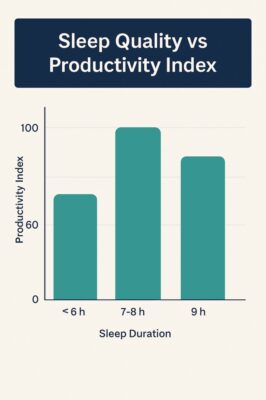
Sleep, especially deep and REM phases, acts as a neurological reset button. During this period, the brain clears waste proteins, consolidates memory, and strengthens learning circuits. Depriving it of rest means accumulating cognitive debt, which shows up as irritability, slower reactions, and reduced innovation.
True peak productivity means integrating micro-rest — short pauses, breathing resets, or even brief walks — throughout the day. These moments of recharge prevent mental burnout and preserve long-term efficiency.
Culture and Communication
An organization’s culture can either nourish or drain peak productivity. Micromanagement kills autonomy — the oxygen of creativity. On the other hand, cultures that trust employees to self-regulate naturally boost engagement and initiative.
When leaders focus on outcomes rather than hours, employees align their natural energy cycles with organizational goals. A sense of psychological safety — where ideas can be shared without fear — further encourages innovation. Peak productivity isn’t achieved through control but through empowerment.
Mindset: The Invisible Engine
Perhaps the most underestimated secret behind peak productivity is mindset. People who view work as a craft, not a chore, naturally sustain deeper engagement. They pursue mastery instead of metrics, which paradoxically makes their metrics shine.
Mindset determines how one responds to setbacks. A fixed mindset resists change; a growth mindset adapts, learns, and evolves. This adaptability fuels persistence — the kind of quiet consistency that compounds into mastery. Peak productivity becomes a byproduct of curiosity and purpose rather than pressure and panic.
The brain rewards novelty and progress. When you see your work as an evolving narrative rather than a checklist, motivation becomes intrinsic. Instead of chasing deadlines, you chase improvement — and improvement is sustainable.
Final Words
The secret behind peak productivity at work is not a single hack but a symphony — of biology, psychology, and intention working together. It’s knowing when to act, when to rest, and when to think differently.
Modern work culture glorifies speed, but peak productivity celebrates rhythm — the alignment between one’s natural energy, emotional stability, and focused attention. It’s less about doing more and more about doing the right things, at the right time, in the right state of mind.
In that alignment lies freedom: the ability to perform at your best without losing your balance. When your habits, environment, and purpose unite, you don’t just reach peak productivity — you redefine what productive truly means.

Andrea Balint is a writer and researcher focused on human behavior, workplace psychology, and personal growth. Through her work at CareersMomentum, she explores how mindset, leadership, and emotional intelligence shape modern careers. With a background in communication and HR development, she transforms complex ideas into practical insights that help readers build clarity, confidence, and professional purpose.