
Customer acquisition may steal the spotlight, but retention is where empires are built. A SaaS company that understands and tracks its retention metrics doesn’t just measure success—it predicts it. In 2025, when subscription fatigue and economic uncertainty are reshaping user behavior, the ability to retain customers has become the single most reliable sign of product-market fit and sustainable growth.
Unlike vanity metrics that impress in presentations but fade in profit reports, retention metrics tell the unfiltered story of value delivery. They show whether customers find your product indispensable or disposable. For SaaS founders, mastering these metrics means mastering the future—because in the subscription economy, every lost customer echoes across months of recurring revenue.
Retention metrics define sustainable SaaS growth. They reveal loyalty, predict revenue stability, and expose friction before churn begins. Tracking retention metrics helps founders understand customer behavior, improve lifetime value, and refine product-market fit. In 2025, retention metrics surpass acquisition data as the clearest indicator of success, transforming short-term users into long-term advocates for every SaaS brand.
Understanding the Foundation of Retention Metrics
Retention metrics go beyond numbers—they reveal trust, consistency, and satisfaction in action. When a founder analyzes retention data, they are not merely calculating how many users stayed; they are measuring how deeply those users are engaged. Customer retention is a reflection of experience quality. Every renewal, every continued login, every upsell opportunity starts from this same pulse: retention.
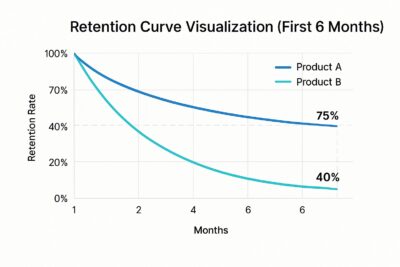
To understand why retention metrics matter, imagine two SaaS products with the same acquisition rates. One keeps 90% of its customers for a year, the other loses half by month three. On paper, both appear successful, but only one has a predictable future. Retention turns short-term growth into long-term stability.

The Link Between Product Experience and Retention
A key insight for 2025 is that retention metrics are no longer isolated from user experience—they are one and the same. Every interaction a customer has with your platform either strengthens their loyalty or accelerates their exit. Founders must look beyond renewal rates and focus on what drives them: ease of use, onboarding flow, customer support, and emotional satisfaction.
Modern retention analysis isn’t just about counting how long someone stays. It’s about understanding why they stay. The companies that master this distinction can refine their entire strategy. When a SaaS founder monitors retention metrics regularly, they uncover patterns of friction and delight. For example, a sudden drop in retention after a pricing change might reveal that users perceive reduced value.
Why Retention Metrics Trump Acquisition
Customer acquisition costs (CAC) are climbing globally, making retention the economic hero of the SaaS model. Acquiring a new user can cost five times more than retaining an existing one, yet too many startups still obsess over growth marketing while neglecting their base. The irony is that retention metrics are the most accurate predictors of lifetime value, future cash flow, and valuation.
In 2025, investors and analysts are paying unprecedented attention to retention. They know that acquisition without retention is a leaky funnel. A SaaS platform with high retention doesn’t just generate stable income—it amplifies word-of-mouth growth and reduces support overhead.
Retention Metrics as a Reflection of Engagement
Retention metrics don’t only measure customer count—they measure engagement quality. When users log in regularly, explore new features, or recommend your product, they are participating in a growth loop that multiplies value. Founders who monitor daily and monthly active users, feature adoption rates, and renewal percentages gain a full picture of their product’s health.
In 2025, advanced analytics platforms allow SaaS founders to segment retention by cohort, behavior, or geography. This approach transforms raw data into actionable insight. For example, if European users have a 20% lower retention rate than North American users, it may signal a localization or pricing issue. This level of granularity turns retention metrics into strategic assets.
Building Predictability with Retention Metrics
The beauty of retention metrics lies in predictability. They turn uncertainty into measurable forecasting. By studying retention curves, founders can anticipate cash flow stability, plan hiring, and even predict investor sentiment. A flat retention curve signals loyalty, while a steep decline warns of product misalignment.
Predictability through retention is especially critical for early-stage SaaS startups. In volatile markets, acquisition spikes can disappear overnight, but a loyal customer base becomes an anchor. Consistent retention gives founders confidence to innovate, expand, and take calculated risks without jeopardizing their foundation.
Emotional Intelligence in Retention
What most founders overlook is that retention metrics also reveal emotional loyalty. Data shows that customers stay longer with brands they trust and feel understood by. Empathy-driven features—transparent billing, human support responses, or personalized onboarding—translate directly into retention gains.
In 2025, AI-driven SaaS companies are learning to measure not just transactional satisfaction, but emotional satisfaction through sentiment analysis. The feedback loops created by these insights allow businesses to evolve dynamically based on how users feel, not just what they click. When emotional data integrates into retention metrics, the result is an entirely new level of insight.
Retention Metrics and Customer Lifetime Value
The connection between retention and customer lifetime value (CLV) is undeniable. Each additional month a customer stays increases not just revenue, but trust equity. Founders who understand their retention metrics can calculate CLV with greater accuracy, allowing smarter pricing, marketing, and feature development.
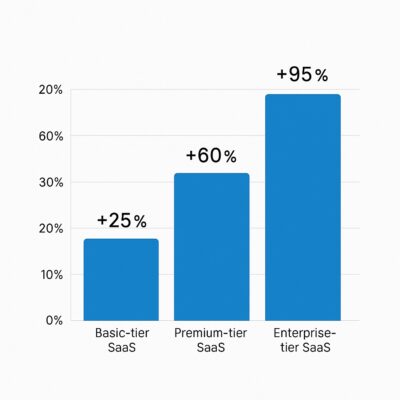
A SaaS business that improves its retention rate by just 5% can see profit increases ranging from 25% to 95%, depending on the model. This statistic alone captures why retention metrics are the most powerful lever for scaling sustainable SaaS ventures.
Using Retention Metrics to Inform Product Strategy
Retention metrics are not isolated data points; they are feedback systems. When a founder analyzes retention, they are effectively running an ongoing product experiment. Every change—be it a new feature, price tier, or UX adjustment—immediately reflects in retention numbers.
The smartest SaaS leaders use retention data to guide roadmaps. They stop guessing what users want and start listening to what the numbers reveal. When retention improves after a product redesign, that data confirms alignment with user needs. When it dips, it signals friction that must be addressed. This cycle transforms retention tracking from reporting into product intelligence.
Retention Metrics in the Era of AI
Artificial intelligence is revolutionizing how retention metrics are tracked and interpreted. Predictive analytics can now identify at-risk customers before they churn. These systems detect subtle behavioral shifts—fewer logins, decreased feature use, or slower response times—and flag them for proactive outreach.
In 2025, SaaS founders leveraging AI-driven retention tools are gaining a decisive edge. Instead of reacting to churn, they prevent it. Instead of speculating why users leave, they intervene early with precision messaging or incentives. AI transforms retention metrics from historical reporting into real-time growth strategy.
Final Words
For SaaS founders, understanding retention metric is both a science and an art. It’s about reading between the numbers to find the human stories hidden inside data. Retention shows not just what customers do, but how much they care.
In 2025, the most successful SaaS companies won’t be those that acquire the most customers—they’ll be those that retain the right ones. Retention metrics illuminate loyalty, reveal pain points, and ensure that growth is grounded in satisfaction rather than hype.
Founders who make retention tracking a cultural habit build companies that don’t just grow fast—they grow strong.

Andrea Balint is a writer and researcher focused on human behavior, workplace psychology, and personal growth. Through her work at CareersMomentum, she explores how mindset, leadership, and emotional intelligence shape modern careers. With a background in communication and HR development, she transforms complex ideas into practical insights that help readers build clarity, confidence, and professional purpose.