
Leadership transparency is no longer a fashionable ideal; it is a defining trait of high-performing teams in the modern workplace. The concept represents a deep alignment between words and actions, between what leaders promise and what they practice. In its essence, leadership transparency builds trust, which serves as the foundation of team performance. When leaders open communication channels, share rationale behind decisions, and acknowledge limitations, they cultivate an atmosphere of shared responsibility that transforms a group of employees into a unified, motivated team.
Transparent leadership does not mean full disclosure of every operational detail; rather, it is the conscious act of guiding others through honesty, empathy, and openness. When leaders admit mistakes, they humanize authority. When they share strategic goals and data, they empower others to act with clarity. This mutual visibility strengthens the team’s sense of belonging and makes individual contributions feel meaningful.
The influence of leadership transparency extends far beyond internal morale. In organizations where leaders communicate openly about performance metrics, the ripple effect is seen in the way teams interpret accountability. When objectives, challenges, and results are shared with honesty, employees adopt a data-driven mindset rather than one based on speculation or fear. This clarity accelerates problem-solving and eliminates the hidden costs of miscommunication. The transparency of leadership essentially becomes an engine for operational efficiency, ensuring everyone moves toward the same goal with unambiguous direction.
In contrast, a lack of leadership transparency breeds uncertainty and detachment. Employees start to fill information gaps with assumptions, which can escalate into distrust or passive resistance. Once that cycle begins, team performance deteriorates, and innovation stalls. Transparent communication counters this by framing information as empowerment rather than control.
Leadership Transparency as Emotional Architecture
Beyond measurable results, leadership transparency acts as an emotional architecture that shapes workplace culture. A transparent leader fosters an emotional climate of inclusion and respect. When employees feel they are part of decision-making, their engagement levels rise naturally. Transparency reduces emotional distance between leaders and teams, and what once felt like a hierarchy becomes a collaborative structure.
In high-transparency cultures, performance conversations are not perceived as evaluations but as opportunities for mutual learning. Employees feel comfortable voicing challenges without fear of reprisal. The tone of leadership becomes consultative rather than authoritative, and that psychological shift directly boosts team performance.
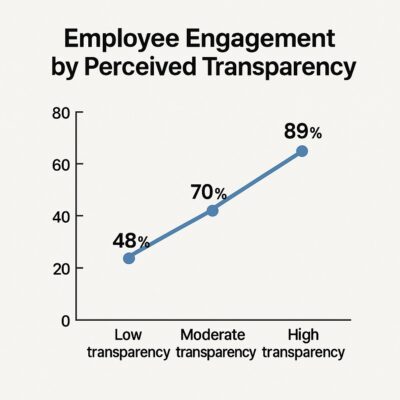
Transparency also plays a vital role in aligning purpose with productivity. When leaders articulate not just what to do but why it matters, employees internalize purpose. That clarity transforms daily tasks into shared missions. Transparent communication creates bridges between strategy and execution. In that environment, performance metrics cease to be numbers on a dashboard—they become collective victories.
Data-Driven Decision Making and Trust
Leadership transparency thrives when it is anchored in data rather than intuition alone. Modern leaders who share the reasoning behind decisions—supported by facts, analytics, or stakeholder insights—earn credibility. Teams are more receptive to directives when they see the logic behind them. Transparent leaders thus shift their authority from positional power to informational trust.
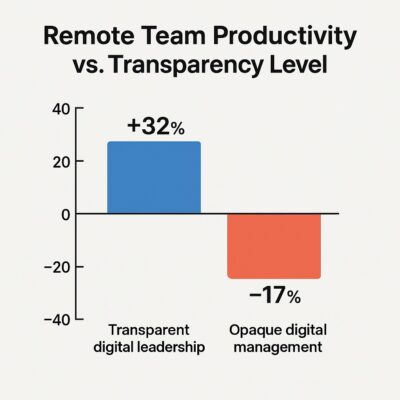
In today’s hybrid and digital workplaces, leadership transparency becomes even more critical. With distributed teams and asynchronous communication, gaps in understanding can easily expand. Regularly sharing updates, project statuses, and long-term visions through open channels maintains alignment. Transparency ensures that physical distance never translates into emotional detachment.
Psychological Safety and Performance Interconnection
At the core of leadership transparency lies psychological safety. When team members know that honesty will not be punished, they take creative risks and innovate freely. Transparency from the top signals that authenticity is valued over pretense. That sense of safety drives the courage to experiment, challenge ideas, and deliver solutions that go beyond baseline expectations.
Organizations that institutionalize leadership transparency often report higher retention and loyalty. Employees are less likely to leave a workplace where they feel seen and heard. Transparency eliminates the silent friction that drives disengagement. Instead of speculating about hidden motives, employees spend energy improving processes, fostering innovation, and pursuing excellence.
The Ripple Effect of Transparent Leadership
Leadership transparency creates cascading effects. One transparent leader influences a department. A transparent department influences an entire organization. Over time, this cultural ripple becomes a systemic advantage. Transparency becomes embedded in performance reviews, strategic planning, and customer interactions. It becomes part of the brand identity, signaling integrity to both employees and clients.
For example, when a CEO publicly acknowledges a miscalculated strategy but also shares a revised recovery plan, employees perceive that as responsible authenticity. This reinforces that transparency is not weakness—it is adaptive strength. Such authenticity restores confidence faster than concealment ever could.
Building a Sustainable Transparent Culture
To embed leadership transparency as a lasting practice, consistency is essential. Occasional transparency may appear performative; habitual transparency earns respect. Leaders who consistently communicate even during uncertainty demonstrate integrity. Sharing partial updates during evolving circumstances still signals respect for employees’ intelligence and maturity.
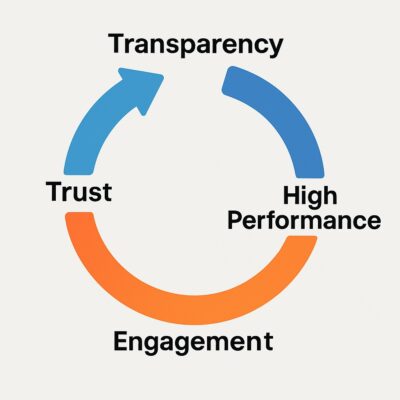
The sustainability of transparency depends on feedback loops. When leaders invite opinions and respond visibly, they reinforce the cycle of openness. Employees mirror what they observe. Thus, transparent leadership does not end with the leader—it multiplies across the hierarchy. Transparency begets transparency, and performance begets performance.
The greatest advantage of leadership transparency is that it transforms accountability from fear-based compliance into pride-based ownership. Teams no longer act because they are told to—they act because they understand and believe in the purpose.
Modern Challenges in Transparent Leadership
Despite its proven benefits, leadership transparency is not without challenges. Excessive disclosure can overwhelm teams or expose strategic vulnerabilities. The art lies in balancing openness with discretion. Transparent leaders must curate communication, sharing enough to inform but not so much that it destabilizes confidence.
Moreover, not all employees are immediately receptive to transparency. In workplaces accustomed to secrecy or micromanagement, sudden openness can feel disorienting. That is why transparency requires cultural adaptation, not just leadership change. It must be introduced gradually, with consistent reinforcement through actions and policies.
Technology can assist this transformation. Internal dashboards, shared OKR systems, and transparent project management tools make information accessible while maintaining security. What matters most is the intention behind transparency—to elevate collaboration, not surveillance.
The Future of Leadership Transparency
In the evolving landscape of organizational behavior, leadership transparency is set to become a decisive competitive advantage. As artificial intelligence, remote systems, and global collaboration redefine work, employees will increasingly value authenticity and visibility from leadership. The ability to communicate truthfully and empathetically will distinguish successful organizations from those anchored in outdated hierarchies.
Leadership transparency will continue shaping not just internal culture but also external reputation. In an age where brands are judged by ethical consistency, transparency stands as the ultimate currency of trust. Teams that grow within such ecosystems outperform not merely because of incentives but because of meaning. The transparent leader, therefore, is not just a communicator—but a cultural architect who transforms honesty into a strategic asset.
Leadership transparency does not just drive performance—it defines the spirit of modern leadership itself. It merges human empathy with operational clarity, creating workplaces where people trust, innovate, and thrive together.
Conclusion
Leadership transparency stands as the invisible infrastructure of trust, collaboration, and consistent performance. It transforms leadership from a position of authority into a practice of authenticity. In workplaces guided by openness, communication becomes a bridge rather than a barrier, and performance emerges naturally from clarity and shared understanding.
A transparent leader empowers through truth, motivates through inclusion, and inspires through example. When leaders choose honesty over control, teams respond with loyalty, creativity, and ownership. That exchange—trust for transparency—creates the conditions in which people and performance evolve together.
As the future of work becomes more digital, global, and emotionally intelligent, leadership transparency will remain the compass guiding sustainable success. It is not merely a communication style; it is a cultural standard that fuels every great team’s momentum toward excellence.

Andrea Balint is a writer and researcher focused on human behavior, workplace psychology, and personal growth. Through her work at CareersMomentum, she explores how mindset, leadership, and emotional intelligence shape modern careers. With a background in communication and HR development, she transforms complex ideas into practical insights that help readers build clarity, confidence, and professional purpose.