The landscape of education is transforming faster than ever before. What once relied on textbooks and classrooms now thrives on data, personalization, and continuous adaptation. As artificial intelligence becomes embedded in every stage of the learning process—from content design to assessment feedback—understanding the essential components of modern learning ecosystems becomes critical for both educators and organizations seeking long-term growth.
The Shift Toward Intelligent Learning Ecosystems
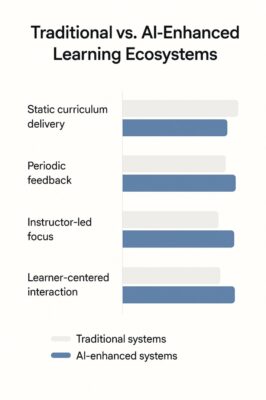
A learning ecosystem used to be a static environment: students, teachers, materials, and a curriculum designed to serve a general audience. However, in the age of AI, these boundaries are dissolving. A learning ecosystem is now dynamic, data-rich, and predictive. It connects people, processes, and technologies in real time, forming a living network that learns from every interaction.
At its core, the essential components of a thriving AI-driven ecosystem are not just technological. They encompass human adaptability, ethical frameworks, and contextual intelligence—elements that balance machine efficiency with emotional understanding.
Human-Centered Design as the Anchor
Among the essential components of any modern ecosystem, human-centered design remains the most crucial. AI may process data faster, but without empathy, design thinking, and inclusivity, even the most advanced systems fail to engage. Human-centered learning ecosystems start with understanding motivation and emotion—what drives people to learn and what prevents them from continuing.
AI algorithms can map cognitive and emotional patterns, but only educators and designers can translate those insights into meaningful interventions. When these human insights guide algorithmic development, the ecosystem becomes self-correcting and context-aware.
Data as the Nervous System
Another one of the essential components of learning ecosystems in the age of AI is data. Data fuels personalization, tracks progress, and supports continuous improvement. However, it must be treated as a sensitive asset. Learners produce data trails across multiple platforms—LMS systems, mobile apps, chatbots, and even biometric sensors in immersive environments.
When this data is harmonized ethically and securely, AI can create dynamic learner profiles that evolve in real time. This allows for the prediction of learning gaps before they appear, and for the delivery of support tailored to each individual’s strengths and weaknesses.
The challenge lies in data governance. Data-driven learning ecosystems require strong privacy protocols and transparent use policies to maintain trust. Without this, the essential components of transparency and fairness collapse, eroding user confidence.
Adaptive Technologies and Continuous Personalization
AI makes learning ecosystems self-adjusting. Through adaptive algorithms, content no longer flows in one direction but reshapes itself according to learner performance. If a learner struggles with a specific concept, the system detects this through real-time analytics and recommends supplementary material or a different modality—like video, gamified quizzes, or micro-lessons.
Adaptive learning systems thus form one of the essential components that define the new educational experience. They turn rigid structures into living ecosystems that constantly evolve. Instead of replacing instructors, AI amplifies their reach, freeing them from repetitive grading and allowing more time for mentorship and creativity.

Collaboration as a Core Value
In AI-powered ecosystems, collaboration emerges as one of the essential components that sustains innovation. Peer learning, cross-institutional partnerships, and community-based co-creation enable networks to stay alive. While AI can optimize collaboration logistics—matching peers based on interests or skills—the emotional intelligence of human interaction remains irreplaceable.
Digital learning communities that encourage participation through AI moderation show significantly higher knowledge retention. Algorithms can analyze conversational tone and engagement patterns, helping moderators identify disengagement early and reintroduce learners into meaningful discussions.
Ethics and Explainability in AI Learning Models
Every intelligent ecosystem must integrate ethical design as one of its essential components. The more AI personalizes learning, the more it risks amplifying bias or creating opaque decision-making systems. Ethical AI frameworks ensure accountability, explainability, and fairness.
Learners must understand why a recommendation was made or why an assessment flagged them as underperforming. Transparency builds trust, while unexplained algorithmic behavior can alienate even the most motivated users.
Educational institutions adopting AI tools are increasingly appointing data ethics officers to oversee fairness metrics and algorithm audits. These structures turn ethical compliance into an operational habit, not just a checkbox requirement.

The Role of Emotional Intelligence in Machine Learning
AI cannot replace emotional intelligence—it can only mirror it when trained with the right parameters. Emotional recognition, sentiment analysis, and empathy simulation are now embedded within advanced learning platforms. Yet, human mentors remain the translators of emotion into meaningful progress.
Therefore, emotional literacy represents one of the essential components bridging human learning and AI efficiency. When ecosystems integrate affective analytics, they create emotionally aware systems that can adapt tone, pacing, and encouragement styles. This hybrid of human and machine empathy forms the emotional backbone of effective learning ecosystems.
Future-Ready Skill Mapping and Predictive Analytics
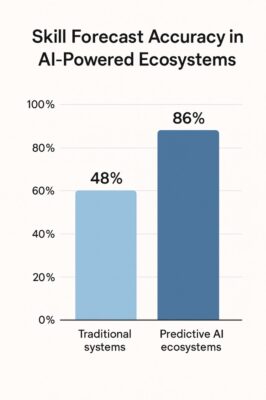
The future of education belongs to systems that not only deliver learning but also predict future needs. Predictive analytics within AI ecosystems forecast which skills will gain demand, enabling institutions to align curricula with real-world trends.
This forward-thinking mechanism is one of the essential components that ensures relevance. For example, if predictive models identify a growing need for ethical AI engineers or climate data analysts, the system can dynamically recommend new learning paths before the job market peaks.
The result is an ecosystem that continuously evolves with the global economy, preparing learners not only for today but for tomorrow’s industries.
Lifelong Learning and Cultural Continuity
As AI democratizes access to information, lifelong learning becomes the new normal. Educational ecosystems are no longer confined to degree programs but expand into workplace learning, online certifications, and informal communities. Lifelong learning platforms integrate micro-credentials, blockchain certification, and gamification to sustain engagement across decades.
One of the essential components of lifelong ecosystems is cultural continuity—ensuring that learning stays aligned with evolving societal values. AI models that understand cultural nuance can personalize experiences globally without imposing homogeneity. They foster global diversity while maintaining individual identity.
Conclusion
Ultimately, the essential components of learning ecosystems in the age of AI merge human creativity with computational intelligence. Machines handle data-driven optimization, while humans ensure purpose, ethics, and empathy. The result is a coevolutionary environment where knowledge is no longer static—it’s fluid, adaptive, and deeply human.
To build this future, educators, technologists, and policymakers must work hand in hand. They must treat learning ecosystems not as products but as living entities—designed to evolve, respond, and inspire.
As AI continues to shape education, the essential components—human-centered design, ethical intelligence, adaptive technology, and emotional resonance—will define which institutions thrive and which fade into obsolescence. The age of AI doesn’t replace the teacher; it amplifies their reach, making education both infinite and personal at once.

Andrea Balint is a writer and researcher focused on human behavior, workplace psychology, and personal growth. Through her work at CareersMomentum, she explores how mindset, leadership, and emotional intelligence shape modern careers. With a background in communication and HR development, she transforms complex ideas into practical insights that help readers build clarity, confidence, and professional purpose.