
Control system engineering is entering a new era. As industries accelerate toward full automation, the discipline that once quietly kept machinery running has become the beating heart of digital transformation. In 2025, control system engineering represents more than stability or regulation—it’s the intelligent coordination of processes, data, and human insight. Engineers in this field are no longer just tuning PID loops; they’re orchestrating entire ecosystems of sensors, AI models, and adaptive feedback systems that learn and evolve.
The very definition of control system engineering has expanded. What was once confined to mechanical, electrical, and industrial contexts now spans robotics, AI-driven manufacturing, smart grids, autonomous vehicles, and even climate control in sustainable cities. This fusion of hardware precision and software intelligence has positioned control system engineering as a critical driver of efficiency, safety, and adaptability across global industries.
The Digital Transformation of Control System Engineering
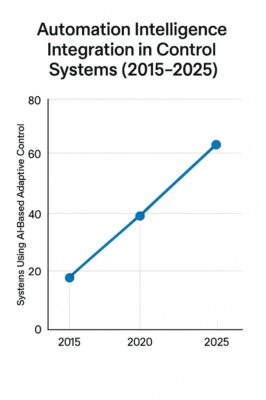
In 2025, control system engineering is deeply intertwined with data science. Modern plants no longer depend on static control logic alone. Instead, predictive algorithms analyze process data in real time, enabling proactive adjustments before deviations occur. Machine learning models are now embedded within control architectures, allowing systems to self-calibrate and maintain optimal performance without constant human oversight.
This digitalization doesn’t replace the engineer—it redefines their role. Control system engineers today act as system integrators, merging IT and OT (operational technology). They must understand both the physics of the process and the mathematics behind the algorithms that govern it. The field’s evolution toward smart automation is creating a new hybrid professional: part data scientist, part engineer, and part strategist.
Cloud Control and Remote Operation
The year 2025 has also seen the maturation of cloud-based control architectures. Remote monitoring, once considered risky due to latency and security concerns, has become remarkably reliable thanks to 5G and edge computing. Control system engineering now leverages distributed intelligence—where local controllers process critical data instantly, while non-urgent optimization occurs in the cloud.
This dual-layered design ensures that even geographically dispersed operations remain tightly synchronized. A refinery in Texas can adjust its distillation tower parameters from a dashboard in Berlin with near-zero delay. The cloud not only hosts analytics but also simulates thousands of control scenarios, preparing the system for unexpected disturbances before they occur.
Human–Machine Collaboration and Safety
One of the most defining shifts in control system engineering has been its approach to human collaboration. Engineers are designing systems that don’t merely automate but cooperate. With the help of augmented reality (AR) and human-in-the-loop (HITL) frameworks, operators now interact with control systems through intuitive interfaces that visualize system states, risks, and predicted outcomes.
Rather than isolating people from automation, control system engineering in 2025 encourages cognitive partnership. An operator wearing AR glasses can see live control diagrams projected over machinery, with data flowing from sensors in real time. This blending of human intuition and digital oversight increases both safety and speed of intervention.
Safety, a long-standing pillar of control system engineering, has evolved into predictive safety. Instead of responding to failures, AI-driven systems now calculate probabilistic failure rates and intervene before a critical threshold is crossed. Predictive alarms replace reactive ones, reducing downtime and saving millions in potential losses.
Cybersecurity in Control System Engineering

As industrial systems become more interconnected, cybersecurity has emerged as one of the top priorities for control system engineering. The same connectivity that allows global optimization also exposes vulnerabilities. In 2025, engineers are designing control loops that are not only efficient but also secure by default.
Cyber-physical security models integrate authentication directly into control logic. Commands now require digital signatures, and anomaly detection algorithms monitor traffic patterns between PLCs and sensors. The goal is to prevent manipulation or unauthorized data injection—a growing threat in sectors like energy, aerospace, and pharmaceuticals.
The most sophisticated systems employ “zero trust” frameworks where every command, even internal, must be verified. This transformation ensures that control system engineering remains resilient, not just functional, in an age of digital threats.
Sustainability and Energy Efficiency
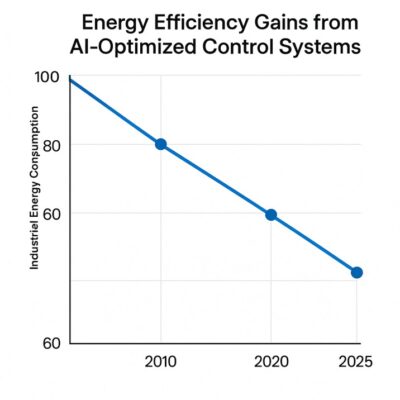
In 2025, control system engineering has become a cornerstone of sustainable development. Whether it’s optimizing the energy profile of a manufacturing line or stabilizing renewable grids with fluctuating input, the discipline provides the intelligence layer behind sustainability.
Modern control algorithms now balance energy efficiency with throughput automatically. Plants are equipped with self-learning control modules that reduce waste heat and adjust production parameters based on carbon emission targets. Control system engineering thus acts as the unseen bridge between industrial performance and environmental responsibility.
For renewable energy networks, control engineers develop advanced models that stabilize solar and wind inputs, counteracting intermittency through smart load balancing. This has made renewable integration not only feasible but economically viable on a global scale.
Education and Workforce Evolution
The evolution of control system engineering has reshaped education too. Universities now emphasize interdisciplinary learning—merging mechanical design, computer science, and AI. The classic control theory courses are supplemented with training in cybersecurity, digital twins, and cloud orchestration.
Professionals are adapting as well. The modern control system engineer must understand both physical system dynamics and software ecosystems. Tools like MATLAB, Python, and Simulink are used alongside TensorFlow and cloud-based simulation platforms. This shift creates engineers who think beyond mechanical stability—they design entire digital control architectures that evolve over time.
Industry demand reflects this transition. Companies are hiring engineers not merely for operational maintenance but for innovation. Those proficient in adaptive control, embedded AI, and cybersecurity command premium salaries, demonstrating that control system engineering has moved from maintenance to strategic innovation.
Final Words
The essence of control system engineering remains the same—maintaining stability in the face of change—but its tools and scope have evolved beyond recognition. Automation is no longer a fixed process; it’s a living network that learns from itself.
As 2025 progresses, the frontier of control system engineering is adaptive autonomy—machines that modify their own control laws based on context. Think of a manufacturing line that adjusts its feedback parameters based on seasonal demand, or a drone fleet that synchronizes flight paths using shared learning models.
These aren’t science fiction scenarios—they’re emerging realities built on decades of control theory refined with modern AI. The next challenge lies in trust: ensuring that automated systems remain explainable and ethically aligned with human intentions. Engineers are now developing transparency protocols that let them trace and justify every AI-driven adjustment in a control loop.
By 2030, experts in control system engineering will actively position the field as the strategic intelligence core of complex infrastructures.From space exploration to bio-manufacturing, every automated environment will depend on it—not just to function, but to think.

Andrea Balint is a writer and researcher focused on human behavior, workplace psychology, and personal growth. Through her work at CareersMomentum, she explores how mindset, leadership, and emotional intelligence shape modern careers. With a background in communication and HR development, she transforms complex ideas into practical insights that help readers build clarity, confidence, and professional purpose.