
Every person at some point reaches a crossroads where yesterday’s routines meet tomorrow’s ambitions. The phrase future endeavors isn’t just a polite expression heard in farewell speeches or professional transitions—it’s a psychological lens through which our aspirations, motivations, and decision-making patterns can be understood. Behind every successful step forward lies an intricate interplay of mindset, emotional resilience, and cognitive foresight that determines how effectively one translates goals into reality.
When people speak about future endeavors, they often picture a clean slate—an opportunity to start anew, explore uncharted territory, or correct old missteps. Yet psychology shows that the ability to build a strong connection between present intention and future action depends on several mental variables: optimism, self-efficacy, adaptability, and delayed gratification. Together, these create the scaffolding upon which every meaningful plan is built.
Successful future endeavors depend on mindset, resilience, and emotional balance. Psychology shows that belief, adaptability, and patience transform goals into progress. When people connect purpose with consistent action, uncertainty becomes motivation and obstacles become lessons. The essence of achieving future endeavors is preparation and awareness, turning thought into movement and vision into results through discipline, clarity, and sustained mental strength.
The Mindset That Shapes All Future Endeavors
At the heart of successful future endeavors is mindset. Psychologist Carol Dweck’s research on fixed versus growth mindsets highlights how perception of ability influences performance. A person with a fixed mindset believes talent alone dictates success, while a growth mindset views effort, learning, and persistence as drivers of improvement. This mental framing can either open or close the door to future opportunities.
Someone embarking on new future endeavors must cultivate a mental environment where failure is not an endpoint but a signal for recalibration. Studies in behavioral psychology confirm that the brain’s reward systems adapt to effort-based challenges—meaning that when we learn to associate satisfaction with progress rather than perfection, persistence strengthens.
Emotional Regulation and the Pursuit of Long-Term Goals
Behind the phrase future endeavors lies an emotional process often underestimated: regulation. The human brain constantly negotiates between immediate comfort and delayed reward. The prefrontal cortex—responsible for decision-making and impulse control—plays a crucial role in aligning emotional energy with long-term plans. When emotional turbulence dominates, consistency falters.
Individuals who excel in their future endeavors often exhibit emotional granularity—the ability to identify and articulate subtle emotional states. This allows them to process failure constructively instead of personalizing it. Psychological studies from Yale and Stanford reveal that people who can name their emotions accurately experience a 30% increase in long-term goal adherence. The reason is simple: self-understanding enhances regulation, and regulation fuels discipline.
The Role of Self-Efficacy in Achieving Future Endeavors
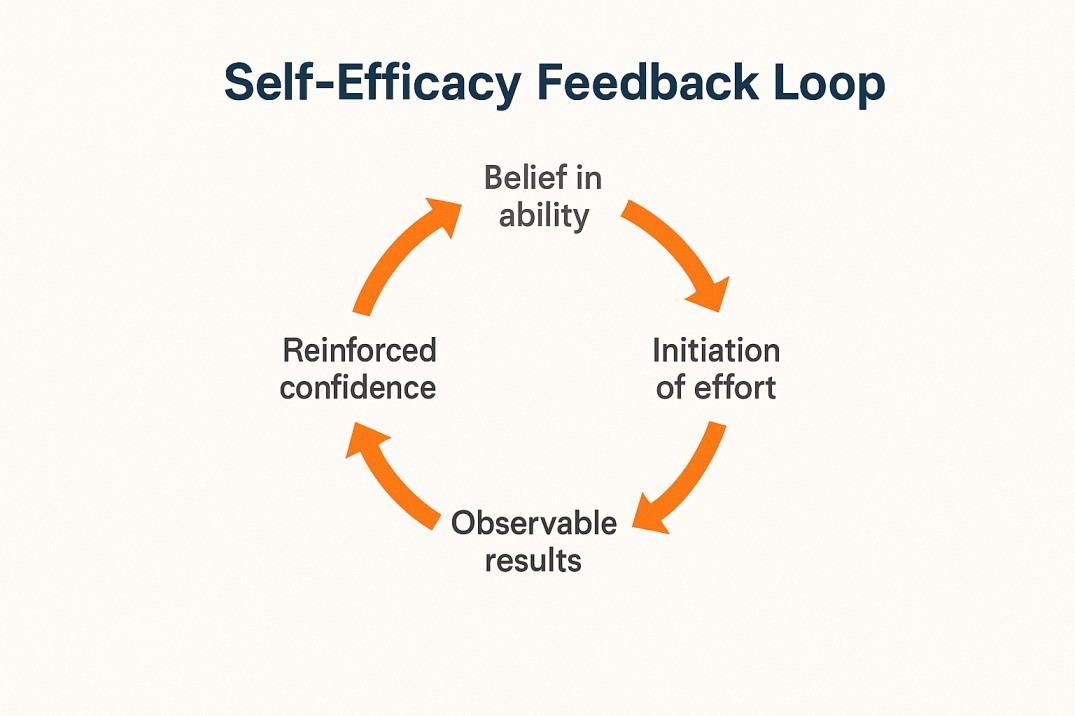
Psychologist Albert Bandura introduced the concept of self-efficacy—the belief in one’s ability to execute actions necessary to achieve specific outcomes. This concept sits at the core of successful future endeavors. When people believe they are capable, they activate a psychological mechanism called “expectancy alignment,” where internal confidence directly influences external effort.
The strength of this belief often determines the degree of persistence. Two individuals can start the same journey with equal resources, yet the one who genuinely trusts their capability will adapt, experiment, and endure setbacks with greater resilience. Self-efficacy creates a self-reinforcing loop: belief breeds action, action breeds results, and results strengthen belief.
Time Perception and the Architecture of Planning
One of the subtler psychological dimensions influencing future endeavors is time perception. People differ in how vividly they can imagine their future selves. Some can project their identity years ahead and make choices accordingly; others struggle to emotionally connect with distant outcomes. This temporal disconnect can explain procrastination, impulsive decision-making, or erratic motivation.
Neuroscientific research from the University of Toronto found that individuals who could clearly visualize their future selves had 50% higher savings rates and longer career stability. The reason lies in cognitive empathy—the ability to feel connected to one’s future identity. When we care about who we’ll become, we invest in actions today that protect tomorrow’s well-being.
For example, a professional considering new future endeavors in a different industry often succeeds not because of luck but because they create a vivid narrative that links the present self to that imagined version. The brain then works toward coherence, aligning short-term behavior with long-term identity.
The Subtle Art of Adaptability

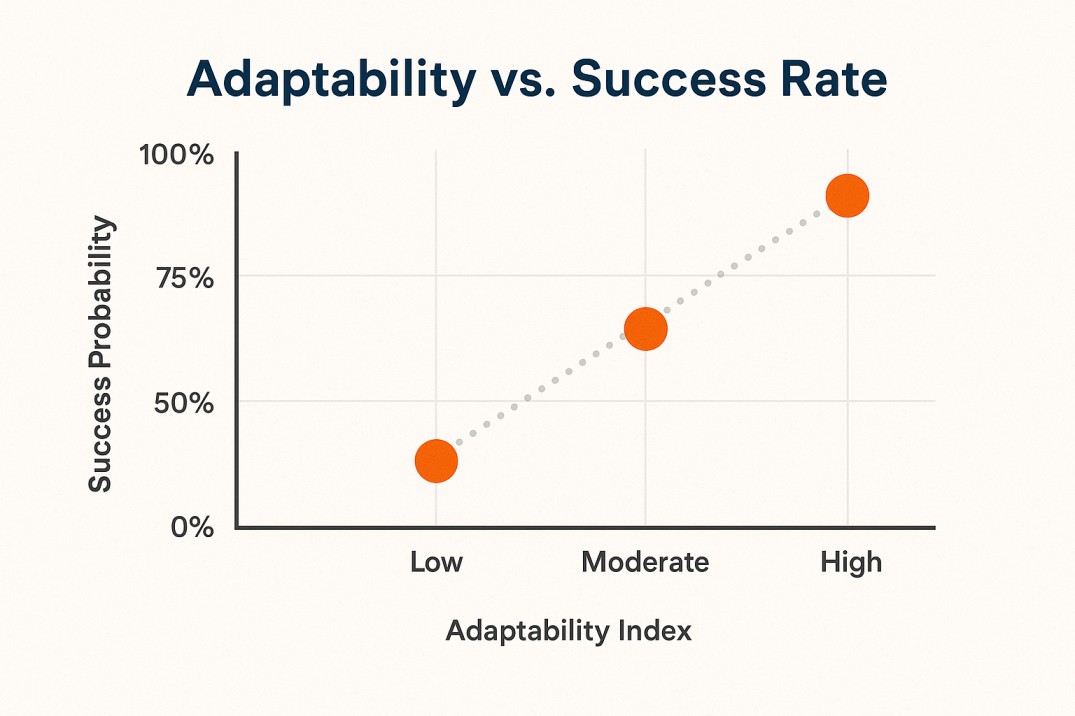
No matter how carefully planned, future endeavors exist in a constantly shifting environment. Economic changes, technological disruptions, and personal crises alter the terrain of progress. The key differentiator isn’t the absence of change—it’s adaptability.
Psychologically adaptable people show higher cognitive flexibility: they can shift between perspectives, reinterpret failures, and reformulate plans without losing momentum. A 2024 study in the Journal of Applied Psychology revealed that professionals scoring high in adaptability were 42% more likely to achieve sustained success after major transitions.
Adaptability acts as the psychological immune system of all future endeavors. Instead of perceiving uncertainty as chaos, adaptable thinkers see it as data—feedback that invites recalibration. They experience stress, but they metabolize it into problem-solving energy.
Delayed Gratification and Cognitive Patience
The famous “Marshmallow Experiment” by Walter Mischel demonstrated that children who could delay gratification tended to achieve better outcomes later in life. The same cognitive pattern governs adult future endeavors. Waiting strategically, investing consistently, and postponing pleasure for growth require what psychologists call “temporal discipline.”
Future-oriented patience is not passive waiting; it’s active structuring. People who master it build momentum through small, consistent wins that accumulate into large-scale change. This skill transforms anxiety about the unknown into anticipation of progress.
Whether launching a startup, changing careers, or rebuilding identity after a failure, the ability to stay calm while outcomes mature defines how one’s future endeavors unfold.
Cognitive Energy and Focus Distribution
In the psychological ecosystem of future endeavors, attention is currency. Every goal competes for mental bandwidth. Cognitive scientists argue that focus is not merely about eliminating distractions but about intelligent allocation—knowing what deserves energy and what does not.
People who distribute focus intentionally engage in what’s known as “cognitive budgeting.” They treat time and attention as finite resources, investing them in activities with high long-term ROI. This prevents burnout and ensures psychological sustainability.
In contrast, fragmented focus leads to cognitive fatigue, where multiple unconnected pursuits drain willpower. When attention is scattered, future endeavors lose coherence. But when concentrated, the mind experiences “flow”—a state of optimal engagement that accelerates achievement.

The Interplay of Meaning and Motivation
No discussion about the psychology of future endeavors is complete without addressing meaning. Viktor Frankl, in his exploration of human resilience, wrote that purpose is the single most powerful force that keeps a person moving through adversity. When goals connect to personal values, persistence becomes almost instinctual.
Modern psychology supports this idea: intrinsic motivation—driven by curiosity, growth, and alignment—outlasts external rewards. People whose future endeavors are tied to personal meaning report 60% higher satisfaction and lower burnout rates. Meaning doesn’t just make work fulfilling; it transforms effort into identity.
To succeed in the long run, one must answer the most difficult yet transformative question: Why do I want what I want? The deeper the answer, the stronger the psychological fuel behind every future step.
Conclusion
Every achievement begins in the invisible corridors of the mind. The psychology behind future endeavors is not a mystery—it’s a roadmap built on awareness, adaptability, emotion, and belief. Success is not only about opportunity; it’s about the mental readiness to engage uncertainty with strategy and patience.
Those who master the psychological dynamics of their thoughts and emotions gain the rare ability to transform intention into momentum. As the science of human behavior suggests, the real foundation of successful future endeavors is not prediction—it’s preparation. The future belongs not to those who merely dream, but to those who consciously train their minds to act when the opportunity arrives.

Andrea Balint is a writer and researcher focused on human behavior, workplace psychology, and personal growth. Through her work at CareersMomentum, she explores how mindset, leadership, and emotional intelligence shape modern careers. With a background in communication and HR development, she transforms complex ideas into practical insights that help readers build clarity, confidence, and professional purpose.