
In an era where every word, decision, and digital footprint can be traced, leadership integrity has evolved from a moral ideal into a professional necessity. Modern organizations no longer thrive solely on innovation or efficiency; they depend on the credibility of the people who lead them. The age of transparency has redefined what followers expect from leaders, demanding not only skill but sincerity. Leadership integrity, once discussed in boardrooms as an abstract virtue, is now the foundation upon which trust, performance, and brand resilience are built.
The contemporary leader stands exposed to unprecedented scrutiny. Every message can be screenshotted, every promise fact-checked, every contradiction amplified. This climate does not destroy leadership; it purifies it. Those who practice leadership integrity emerge not just as managers but as moral compasses for their teams. When a leader’s internal values align with their external actions, credibility multiplies. That alignment—between principle and practice—is the true definition of leadership integrity.
Integrity as the Currency of Trust
Leadership integrity functions as an invisible currency in corporate ecosystems. While profit margins fluctuate and industries pivot, integrity remains a stable force that attracts loyalty and collaboration. A transparent environment doesn’t threaten a leader with integrity—it validates them. People can sense when communication is authentic, when a leader genuinely stands behind their words. In contrast, even minor hypocrisy can corrode culture faster than any market downturn. In the digital age, reputation isn’t merely earned; it’s monitored in real time.
The Transparency Era: Friend or Foe?
Transparency amplifies both truth and error. In earlier decades, organizational integrity could be managed through polished PR campaigns. Today, internal culture is public culture. Employees share their experiences online; customers voice concerns publicly; investors analyze leaders as much as they analyze numbers. Leadership integrity thus becomes more than an ethical choice—it’s a strategic imperative. A single act of dishonesty can erode years of credibility, while consistent truth-telling builds a resilient brand narrative. The companies that understand this are those that position integrity not as an afterthought, but as infrastructure.
Psychological Foundations of Leadership Integrity
The psychology behind leadership integrity is rooted in cognitive consistency. Teams subconsciously look for alignment between a leader’s stated mission and visible behavior. When this alignment exists, psychological safety rises. People take creative risks, voice concerns, and innovate without fear. When integrity is compromised, even subtly, the opposite occurs. Employees retreat into silence. Fear replaces trust. Performance metrics decline not because skills vanished, but because faith in leadership dissolved.
Measuring Integrity in the Digital Workplace
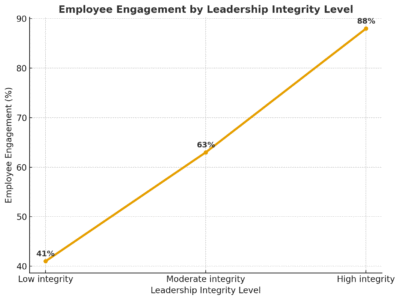
In the age of transparency, integrity is measurable. Metrics like employee retention, Glassdoor ratings, and social sentiment analysis offer tangible reflections of ethical leadership. Teams led by individuals with strong leadership integrity often show higher retention rates and lower absenteeism. This correlation is not coincidental; it reflects emotional security within the workforce. Employees prefer stability rooted in honesty over charisma that conceals uncertainty.
What makes leadership integrity particularly challenging today is the pace of decision-making. Leaders must respond in real time to crises, social issues, and global debates. Each response is public, permanent, and subject to analysis. Integrity, therefore, cannot be performative; it must be instinctive. When a crisis unfolds, there’s no time to fabricate an ethical image. The truth must already live within the person leading. Transparency is not a threat to those who embody integrity—it is the ultimate ally that proves them genuine.
The Business Case for Integrity
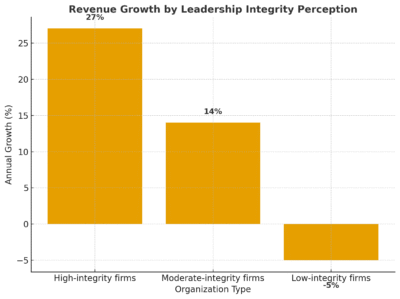
Organizations are beginning to quantify the financial return of leadership integrity. Studies consistently show that companies led by trustworthy executives outperform competitors in stock performance and customer satisfaction. Investors increasingly factor ethical leadership into decision models. The ESG (Environmental, Social, and Governance) framework rewards transparency as a sign of sustainability, not vulnerability. In this context, leadership integrity becomes both moral capital and market capital.
Integrity as a Daily Discipline
But cultivating leadership integrity requires more than compliance checklists or slogans about values. It starts with introspection—an honest audit of one’s motivations, fears, and contradictions. The transparent age does not punish imperfection; it punishes concealment. Leaders who admit mistakes and demonstrate learning create stronger bonds than those who project flawless authority. Authenticity, after all, is not about perfection but consistency. When a leader’s behavior reflects their declared purpose across both private and public settings, integrity becomes self-reinforcing.
The art of cultivating leadership integrity lies in small, repeated choices. It manifests when a manager credits a team member for success, when an executive declines to manipulate metrics for short-term gain, when feedback is given with respect rather than ego. In the long term, these moments form the character mosaic of leadership. They prove that integrity is not an abstract virtue but a daily practice woven into every interaction.
Technology and the Ethics of Visibility

Ethical leadership in the transparency era also intersects with technology. Artificial intelligence, data analytics, and digital transformation have expanded both opportunity and accountability. With AI systems tracking productivity and public data revealing organizational behavior, there’s little room for pretense. A leader’s ethical framework influences not only people but algorithms—determining how fairness and inclusion are coded into operations. Leadership integrity, therefore, becomes the ethical operating system of the modern enterprise.
Institutionalizing Integrity Without Losing Authenticity
The challenge for many organizations is institutionalizing integrity without diluting authenticity. Policies can enforce transparency, but culture must inspire it. The most respected leaders understand that integrity cannot be delegated. It requires personal accountability even when inconvenient. They realize that visibility doesn’t create integrity; it reveals it. To cultivate leadership integrity, leaders must move beyond slogans and embody ethical conviction in silence as much as in spotlight moments.
Transparency also democratizes feedback. Employees now expect access to leadership thought processes. They value being informed about decisions that affect them. The absence of communication breeds suspicion, while openness fosters alignment. Here, leadership integrity intersects with communication ethics—how truth is shared, not just what truth is shared. The courage to communicate honestly, even when news is unpleasant, separates credible leaders from corporate actors.
Final Words
Ultimately, cultivating leadership integrity in the age of transparency demands courage. It asks leaders to act with conviction even when no one is watching, knowing that eventually, someone always will. The public stage of modern business means integrity is not just a moral stance—it’s an identity marker. It determines which leaders command trust beyond titles and which crumble under exposure.
Leadership integrity endures because it answers the oldest leadership question: who are you when no one is looking? In a transparent world, that question no longer remains hypothetical. Every decision, email, and policy becomes part of the answer. True leaders don’t fear this exposure; they welcome it as validation of their authenticity. In the end, leadership integrity isn’t about how you appear—it’s about what you consistently choose to be.

Andrea Balint is a writer and researcher focused on human behavior, workplace psychology, and personal growth. Through her work at CareersMomentum, she explores how mindset, leadership, and emotional intelligence shape modern careers. With a background in communication and HR development, she transforms complex ideas into practical insights that help readers build clarity, confidence, and professional purpose.