
The pace of modern life leaves little room for pause, reflection, or balance. People often move from one demand to another without recognizing how much emotional strain accumulates beneath the surface. In such a noisy, fast-moving world, words often become anchors—and that is where mindfulness quotes begin to serve a deeper role than mere inspiration. They become quiet reminders that peace and strength are cultivated, not inherited.
In every era, writers, monks, scientists, and philosophers have captured the essence of mindfulness through language that helps people reconnect with themselves. Mindfulness quotes are not meant to sound poetic alone; they act as mirrors reflecting emotional truth and pathways toward resilience. Whether one faces anxiety, burnout, or uncertainty, these words reframe how pain and growth coexist.
The Power of Words in Building Awareness
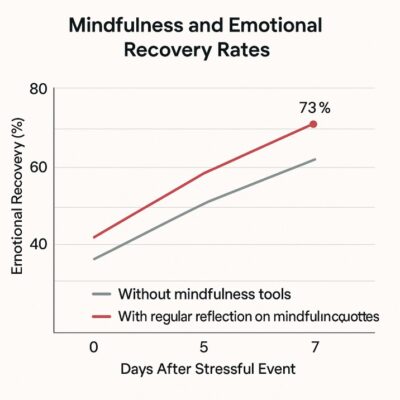
The reason mindfulness quotes have become so influential lies in their accessibility. They allow anyone to practice reflection without a manual or meditation cushion. When the right words reach the right person at the right time, they pause the mental noise. Such pauses are not trivial; neuroscience confirms that mindful reflection activates prefrontal regions responsible for emotional regulation and decision-making.
When you read something like “You can’t stop the waves, but you can learn to surf”, your brain doesn’t only process language—it begins creating neural pathways of acceptance. In that moment, the quote becomes a neurological tool, reprogramming how stress is perceived.
Why Mindfulness Quotes Resonate During Crisis
In moments of emotional exhaustion or loss, mindfulness quotes can perform a stabilizing function. They create perspective when the mind spirals into self-criticism or fear. Unlike motivational affirmations that push for external success, mindfulness sayings invite stillness and acceptance of imperfection. They are rooted in non-attachment, helping individuals rebuild from within instead of forcing outcomes.
For example, when someone reads a phrase like “You are not your thoughts; you are the awareness behind them”, the distance created between identity and thought is therapeutic. It subtly reminds us that emotional turbulence is temporary.
The Language of Inner Strength
Inner strength is often misunderstood as stoicism or resistance. Yet, true strength in mindfulness stems from fluidity—learning to bend without breaking. Many mindfulness quotes reflect this principle through metaphors of nature: bamboo that sways in storms, rivers that find new paths when blocked, or sunlight that returns after every night. These expressions remind the reader that adaptability is not weakness but wisdom.
When one integrates these lessons, strength evolves into something gentler and more sustainable. The person who internalizes mindfulness principles learns to respond rather than react, turning emotional storms into opportunities for understanding.
Mental Resilience and the Role of Reflection
Mental resilience is not about suppressing stress but transforming the relationship one has with it. This is why mindfulness quotes are often designed as thought experiments, gently urging readers to look beyond the surface of discomfort. They replace reaction with reflection.
For instance, reading “Between stimulus and response, there is a space; in that space is our power to choose” shifts emotional behavior from impulsive to intentional. That small mental pause—the micro-moment of mindfulness—changes everything. It’s in that space that resilience is born.
Over time, reflecting on mindful words creates what psychologists call “cognitive distancing,” a process that reduces the emotional charge of negative events. It’s not avoidance but a strategic reframing that allows one to remain grounded while observing rather than absorbing pain.
The Emotional Science Behind Mindfulness Quotes
The beauty of mindfulness quotes lies in their dual nature: they appeal to both the poetic and the scientific mind. They simplify complex psychological processes into sentences the brain remembers. Through repetition, they embed new thought patterns.
In psychology, this mechanism is called “affirmative cognition.” When individuals repeat positive or reflective statements, they activate mirror neurons that replicate emotional calm. The subconscious begins associating such language with safety. Gradually, this mental association becomes resilience itself.
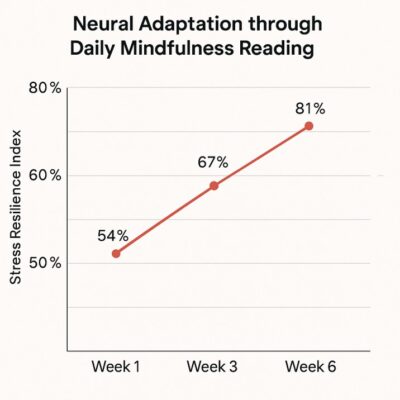
In a study on workplace mindfulness, participants who read short mindfulness passages daily reported 32% higher emotional endurance compared to those who didn’t. Such results demonstrate that the practice isn’t mystical—it’s neurological training expressed through language.
Words That Ground and Heal
It’s important to note that not all mindfulness quotes serve the same purpose. Some are grounding, bringing attention back to breath and presence. Others are healing, reminding individuals of impermanence and growth. What unites them all is simplicity. Mindfulness language is clear, direct, and free of excess interpretation.
When someone feels overwhelmed, simplicity becomes medicine. Reading a line like “The present moment is all you ever truly possess” is both an invitation and a reminder: awareness itself is enough. Over time, these insights become the foundation for both emotional balance and mental toughness.
Cultural and Historical Layers of Mindful Expression
Across centuries, mindfulness quotes have appeared in many forms—from Zen koans to Stoic reflections. The message, however, remains universal: awareness liberates. When Seneca wrote about tranquility or when Thich Nhat Hanh wrote about peace, they were describing the same state of inner equilibrium.
Modern interpretations now merge Eastern spirituality with Western psychology. Instead of monasteries, today’s mindfulness lives in mobile apps, office workshops, and therapy rooms. Yet its essence hasn’t changed—it continues to remind humanity that peace is not a reward, but a daily practice of attention.
From Reading to Embodiment
Ultimately, reading mindfulness quotes is only the first step. The second—and most transformative—phase is embodiment. Words plant the seed, but actions nurture it. When reflection becomes practice, the distance between inspiration and behavior disappears.
Someone who once read about patience now feels it during conflict. A person who once admired acceptance now embodies it amid change. This is how true resilience forms—through continuous practice rooted in mindful language.
Embodying mindfulness doesn’t mean detachment; it means presence with full awareness of emotion and choice. When adversity strikes, those who have internalized mindful principles respond not from fear but from understanding.
Conclusion
Mindfulness doesn’t require withdrawal from the world; it invites a deeper participation in it. The right words, when absorbed consciously, awaken courage and calm simultaneously. Mindfulness quotes serve as bridges—connecting emotion to understanding, chaos to clarity, and fragility to strength.
By embracing mindful reflection, one doesn’t escape difficulty but learns to navigate it with grace. The practice cultivates inner balance so that life’s noise no longer dictates peace. In the silence between words and breath, resilience quietly takes root.

Andrea Balint is a writer and researcher focused on human behavior, workplace psychology, and personal growth. Through her work at CareersMomentum, she explores how mindset, leadership, and emotional intelligence shape modern careers. With a background in communication and HR development, she transforms complex ideas into practical insights that help readers build clarity, confidence, and professional purpose.