The definition of productivity has transformed dramatically in the last decade, and nowhere is this more evident than in hybrid work cultures. The blend of remote and in-office collaboration has redefined not only how we communicate but also how we structure our professional lives. At the center of this transformation lies a timeless yet evolving asset: organizational skills.
Organizational skills once referred to neat calendars, color-coded task lists, and efficient email management.
In 2025, however, these abilities stretch far beyond tidy schedules. They now represent mental adaptability, digital literacy, and emotional balance. As workspaces shift between homes, co-working hubs, and corporate offices, the question is no longer whether one possesses organizational skills—but whether one can evolve them to suit a hybrid reality.
Organizational skills in hybrid work now transcend calendars and checklists. Today, they blend digital literacy, emotional balance, and adaptive structure. As autonomy replaces supervision, professionals must manage focus, energy, and technology intentionally. True productivity in 2025 hinges on rhythm, not routine—balancing collaboration, AI-driven tools, and emotional clarity to sustain coherent, high-performing hybrid work.
The Changing Nature of Structure
In traditional office setups, structure was externally imposed: team meetings, clock-in hours, and direct supervision shaped how tasks flowed. But hybrid work dismantled that external structure and replaced it with autonomy. Employees now shoulder the responsibility of managing their time, attention, and mental space with minimal oversight. As a result, organizational skills have become the invisible scaffolding that keeps modern work from collapsing under its own flexibility.
In hybrid environments, people are expected to toggle between collaboration and solitude without losing coherence. That requires not only time management but also environmental control—the ability to maintain focus amid home distractions while seamlessly transitioning back into team-based synergy.
Organizational skills in this context are no longer about routine; they’re about rhythm. They determine how well someone can shift between asynchronous digital communication and synchronous in-person collaboration without burnout or misalignment.
Digital Tools and Cognitive Load

The digital transformation that enables hybrid work has also increased mental clutter. Between task management software, messaging apps, and project dashboards, workers now navigate a jungle of notifications. Without refined organizational skills, these tools can easily become distractions instead of assets.
Research shows that employees spend nearly 23% of their day switching between apps—time lost not to inefficiency, but to fragmented attention. The modern professional’s success, therefore, hinges on their ability to integrate technology with discipline. Organizational skills now include digital discernment: knowing which tools to use, when to use them, and—perhaps most importantly—when to disconnect.
This new era of hybrid work rewards those who can manage their cognitive bandwidth as much as their calendar. It’s not just about managing time anymore; it’s about managing energy and attention flow in environments that never truly switch off.
The Emotional Layer of Organization
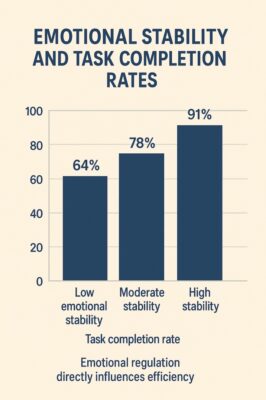
Perhaps the most overlooked aspect of organizational skills is their emotional foundation. Hybrid work has blurred the boundaries between personal and professional life, often causing subtle fatigue and emotional disorganization.
In the past, physical separation between home and office helped workers mentally reset. Today, that separation is often missing, forcing employees to consciously regulate their emotional energy.
Emotional organization—the capacity to manage stress, maintain composure, and balance empathy with efficiency—has become a vital extension of traditional organizational skills. The best hybrid workers are not just those who meet deadlines but those who maintain emotional equilibrium while doing so.
This shift has encouraged HR leaders to view organizational skills not merely as technical competencies but as holistic capabilities tied to mental health, resilience, and communication. Employers who understand this evolution are now investing in mental wellness training and time-blocking workshops that integrate both psychological and practical dimensions of organization.
Hybrid Leadership and Structural Influence
The evolution of organizational skills also reshapes leadership. Hybrid managers can no longer rely on physical presence to gauge engagement. They must instead design structures that promote visibility, accountability, and autonomy without micromanaging. That requires refined organizational skills at a systemic level—planning workflows, delegating effectively, and sustaining culture across both physical and digital divides.
In this new ecosystem, leaders must demonstrate both personal and structural organization. Their ability to model clarity, maintain transparent communication, and synchronize team rhythms defines whether hybrid work feels liberating or chaotic.
This transformation has also given rise to “organizational empathy”—leaders’ sensitivity to individual work preferences and time zones. The ability to structure work around human patterns rather than rigid corporate systems is now seen as the hallmark of adaptive leadership.
The Role of AI in Modern Organization
Artificial intelligence is subtly redefining organizational skills yet again. Smart assistants, automated scheduling, and AI-driven analytics can anticipate workload patterns and suggest optimal times for focus or collaboration. But this convenience can also breed over-reliance. True organizational mastery lies in balancing automation with intentionality.
Workers who use AI effectively maintain cognitive ownership of their schedules. Instead of surrendering control to digital systems, they co-manage with them. This evolution reflects a new layer of competence: organizational intelligence—the synergy between human awareness and machine efficiency.
As AI continues to predict task flow and workload cycles, professionals with strong foundational organizational skills will extract more value from these technologies. Those without structure, however, risk becoming reactive operators in systems they no longer command.
Future-Proofing Organizational Skills
Looking ahead, hybrid work is not a temporary experiment—it’s the blueprint for the modern economy. The ability to self-organize amid shifting conditions will soon define employability itself. In the next decade, employers will value adaptability, self-discipline, and digital clarity as much as degrees or certifications.
The evolution of organizational skills will continue to follow technological and psychological shifts. We are entering a world where professionals must master temporal awareness (knowing when to act), digital boundaries (knowing when to stop), and collaborative rhythm (knowing how to align). These layers of organization turn work from chaos into choreography.
The next frontier for HR and business leaders lies in designing environments that reward clarity and flow rather than constant activity. In that sense, organizational skills are no longer a personal virtue—they’re a strategic differentiator. Teams with strong organizational cultures outperform competitors not because they work harder, but because they work with structured intelligence.

Conclusion
Ultimately, the evolution of organizational skills reflects the human need for stability in motion. Hybrid work blurred boundaries, digitized structure, and redefined teamwork, but it also reaffirmed something deeply human—the desire for coherence and meaning. The professionals thriving in this new era are not those with perfect systems, but those who harmonize systems with self-awareness.
The hybrid environment rewards people who understand that organization isn’t just about tasks—it’s about intention. It’s the art of aligning actions with values, of creating flow amid chaos, and of balancing autonomy with collaboration. The new mastery of organizational skills is not about control—it’s about conscious coordination.
As the workplace continues to evolve, so too will our definition of order. Whether supported by AI, shaped by emotion, or guided by leadership, organizational skills remain the heartbeat of hybrid success. They remind us that while tools and technologies may change, the essence of productivity—the structured mind behind the screens, remains irreplaceable.

Andrea Balint is a writer and researcher focused on human behavior, workplace psychology, and personal growth. Through her work at CareersMomentum, she explores how mindset, leadership, and emotional intelligence shape modern careers. With a background in communication and HR development, she transforms complex ideas into practical insights that help readers build clarity, confidence, and professional purpose.