
Psychology and social work both explore the human condition — yet one studies behavior, and the other heals through action. This in-depth guide unpacks how these two fields overlap, diverge, and empower those who want to make a meaningful impact. From mental health counseling to community advocacy, you’ll see how to choose your ideal path in psychology and social work based on passion, skill, and purpose.
Choosing between psychology and social work isn’t simply a matter of career titles or salaries. It’s about discovering how you want to interact with human complexity. Some professionals are drawn to the cognitive mysteries of the mind, while others are inspired by real-world problem-solving that changes lives directly. The beauty lies in how these paths intersect, overlap, and even merge to create transformative careers that redefine care and compassion in modern society.
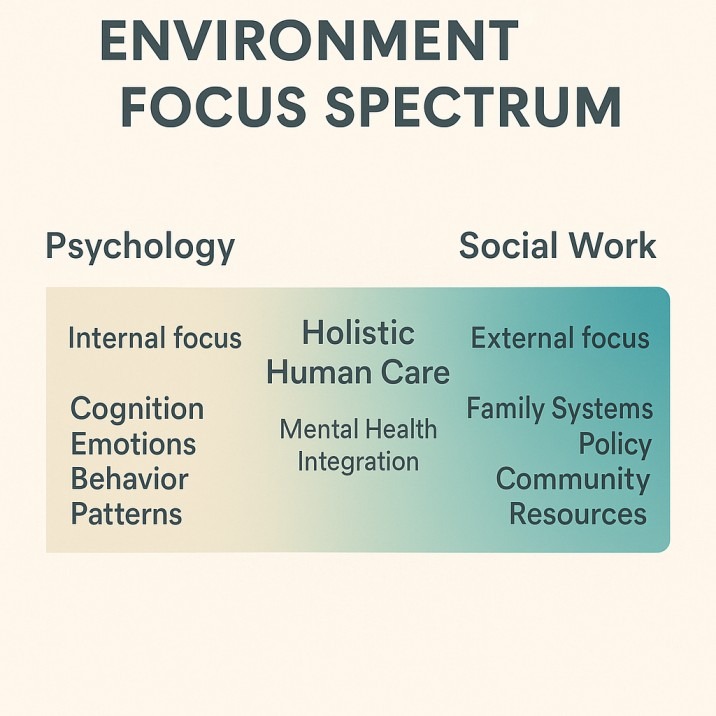
At the foundation, both psychology and social work aim to improve human well-being. Yet the ways they approach this mission differ profoundly. Psychology often begins with theory — exploring why people behave as they do, understanding patterns of thought, and studying emotional responses under various conditions. Social work, on the other hand, takes those insights and applies them in communities, institutions, and policy settings where help is most urgently needed. The two careers complement each other like thought and action — one decoding the inner world, the other repairing the outer one.
Psychology and social work both aim to improve human well-being but differ in approach. Psychology focuses on understanding thought and behavior, while social work applies those insights to real-world change. Both careers demand empathy, resilience, and purpose. Whether you study the mind or transform communities, each path in psychology and social work leads to meaningful impact through understanding and compassion.
The Core Difference Between Psychology and Social Work
Psychologists study behavior and cognition, seeking to explain how internal processes shape external outcomes. Social workers focus on social systems — families, schools, healthcare, and justice — identifying barriers and building solutions for equity. Someone trained in psychology may spend years examining trauma from a clinical or research standpoint, while a social worker may guide a client through the actual process of securing therapy, shelter, or legal aid.
Despite this divergence, psychology and social work share one moral center: empathy. Whether you’re listening to a patient recount a painful memory or helping a family navigate financial distress, the goal is to restore dignity and emotional stability
Education and Pathways
When deciding between psychology and social work, understanding the educational journey can guide you. A psychology career usually begins with a bachelor’s degree in psychology followed by graduate studies, often culminating in a master’s or doctoral degree (Ph.D. or Psy.D.) for clinical or research positions. Social work careers often start with a Bachelor of Social Work (BSW), followed by a Master of Social Work (MSW), which opens doors to licensed practice.
Both fields require intensive training in human behavior, ethics, and intervention strategies, but their practical outcomes differ. Psychology emphasizes assessment, diagnosis, and treatment from a scientific lens. Social work prioritizes empowerment, advocacy, and accessibility.
A person drawn to data analysis, experimental design, or therapy models might lean toward psychology. Someone motivated by direct service, justice reform, or social equity might feel at home in social work. Still, many hybrid careers now blend the two, allowing professionals to serve both mind and society simultaneously.
The Nature of Daily Work
What you do day-to-day in psychology and social work depends on your setting. A psychologist may work in a clinic, university, or private practice, conducting assessments or providing therapy. Social workers often navigate diverse environments — hospitals, schools, nonprofits, or public agencies — managing caseloads and connecting people to resources.
While psychologists typically analyze, interpret, and treat mental or emotional disorders, social workers handle the broader social context of those conditions. They coordinate with families, institutions, and other professionals to ensure stability and support.
Both roles demand emotional resilience and exceptional communication skills. Listening without judgment, maintaining boundaries, and sustaining empathy are essential to success. The work is deeply rewarding but also emotionally demanding — especially when outcomes rely on complex social structures beyond individual control.
The Emotional Reward of Each Path
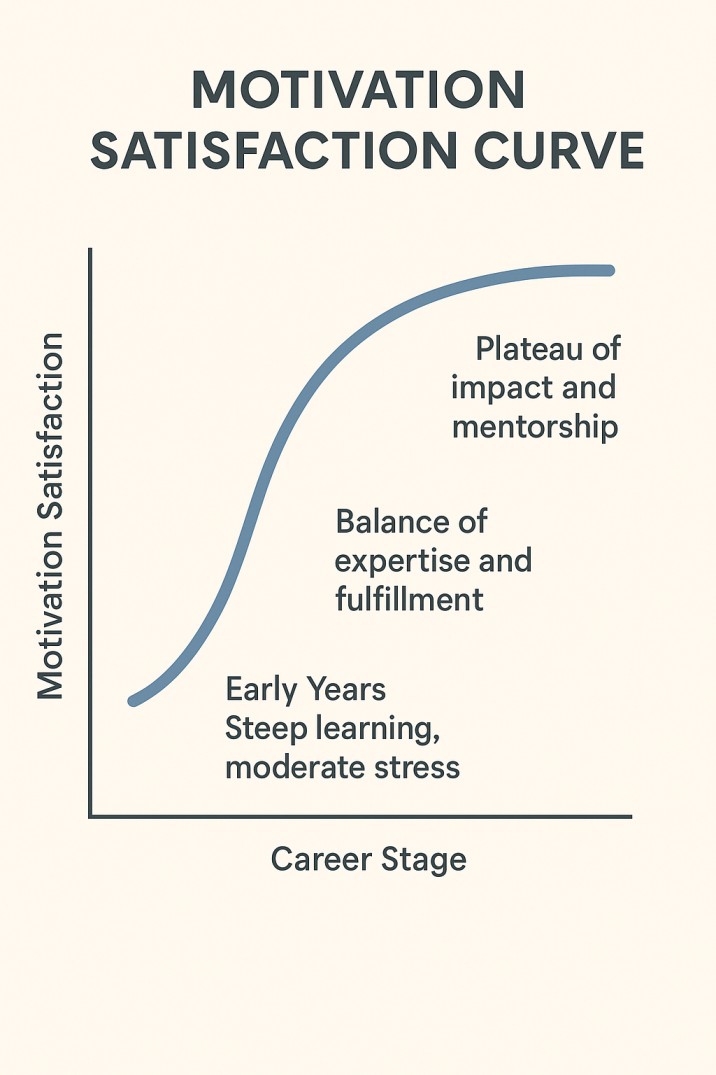
Every career in psychology and social work offers its own version of fulfillment. Psychologists often describe the joy of witnessing breakthroughs — when a client reclaims confidence, heals trauma, or reshapes destructive thought patterns. Social workers, on the other hand, find meaning in systemic victories: helping a struggling family secure housing, ensuring a neglected child receives protection, or reforming a policy that helps hundreds of unseen individuals.
These victories may seem different in form but are identical in essence. Both arise from a desire to serve — to make the unseen seen and the unheard heard. Over time, professionals in these fields often report a deeper understanding of humanity and themselves. The career becomes not just a job but a reflection of one’s personal philosophy about compassion and resilience.
Evolving Trends in Psychology and Social Work
In today’s digital society, psychology and social work are rapidly adapting. Teletherapy, AI-driven case management, and data analytics are transforming how professionals deliver care. Remote counseling platforms now make mental health services accessible to clients who once faced geographical or financial barriers.
At the same time, social work has embraced technology to streamline intervention processes. Caseworkers use digital records, social data, and community mapping tools to identify patterns of need. The overlap between the two fields is increasing as interdisciplinary teams collaborate — psychologists providing diagnostics while social workers translate insights into action.
This synergy is especially visible in crisis response, where integrated teams handle both emotional trauma and logistical recovery. Whether after a natural disaster or a public health emergency, the partnership between psychology and social work proves that holistic care demands both emotional understanding and social structure.
Salary and Job Outlook
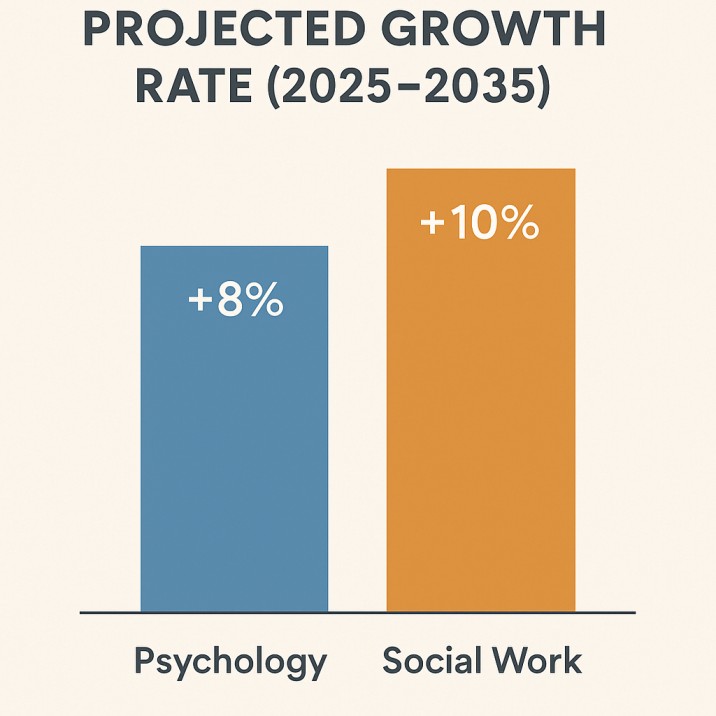
While passion should lead the way, practical factors also matter. According to U.S. labor statistics, psychologists earn a median salary between $85,000 and $100,000 depending on specialization. Clinical social workers, though typically earning between $55,000 and $70,000, often enjoy more varied career mobility across public and private sectors.
Demand for both is strong — mental health awareness, aging populations, and social reform have created expanding need for qualified professionals. The Bureau of Labor Statistics predicts faster-than-average growth for both fields in the next decade. This means that choosing psychology and social work as a career isn’t just noble — it’s future-proof.
Finding Your Fit
Choosing your direction within psychology and social work ultimately comes down to introspection. Ask yourself what kind of impact fulfills you. Do you thrive in one-on-one conversations exploring the psyche, or do you find energy in navigating community systems and policies? Do you prefer structured, long-term study of human behavior, or are you drawn to immediate, tangible outcomes through service?
There is no wrong answer — only different routes toward healing and contribution. Some start in social work and later specialize in psychological counseling; others study psychology and later pivot toward community engagement. In many institutions, these professionals work side by side, sharing the same mission through different methods.
By understanding yourself as deeply as you wish to understand others, you’ll find clarity in the choice between psychology and social work. The world needs both: thinkers who analyze, and doers who act.
Final Words
Both psychology and social work remind us that knowledge and empathy are inseparable. To study the human mind without addressing its environment is incomplete. Likewise, to address social issues without understanding emotional roots is ineffective.
The synergy between these disciplines represents the best of modern humanity — an alliance of intellect and compassion. Whether you’re mapping neural patterns or advocating for housing rights, your work contributes to the same goal: improving life through understanding. And in that sense, psychology and social work are not just professions but moral commitments to the collective human journey.

Andrea Balint is a writer and researcher focused on human behavior, workplace psychology, and personal growth. Through her work at CareersMomentum, she explores how mindset, leadership, and emotional intelligence shape modern careers. With a background in communication and HR development, she transforms complex ideas into practical insights that help readers build clarity, confidence, and professional purpose.