Adaptability has become the ultimate form of intelligence. As technology accelerates, job markets evolve, and industries transform, the ability to continually learn new competencies defines long-term success. This is where skill acquisition enters as a cornerstone of lifelong learning. It represents more than just the process of learning—it’s a mindset, a neurological adaptation, and an economic necessity.
The traditional education model, once designed for stability and predictability, no longer keeps pace with a dynamic world. Today, people are not simply expected to master a single craft and maintain it for life. Instead, they must constantly retool, relearn, and reinvent themselves. The capacity for skill acquisition—learning efficiently and applying knowledge flexibly—has become the most important meta-skill of all.
The Evolution of Learning in the Age of Acceleration
The 21st century marks a fundamental shift in how knowledge is consumed, shared, and retained. In previous generations, learning was linear and time-bound: you studied in your youth, worked in your adulthood, and retired in later years. But now, this lifecycle has been replaced by continuous learning loops.
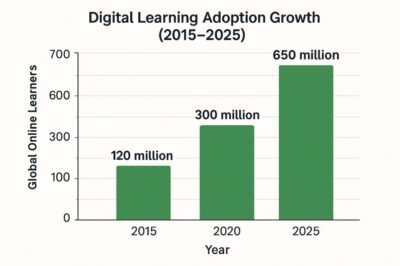
Through digital platforms, micro-learning apps, and immersive technologies, learners can absorb complex topics from neuroscience to coding in digestible bursts. Yet the abundance of content presents a paradox—information is everywhere, but focus and structure are scarce. This is why understanding the mechanisms behind skill acquisition is crucial. It gives learners the tools to navigate the noise and transform information into applied mastery.
How the Brain Adapts Through Skill Acquisition
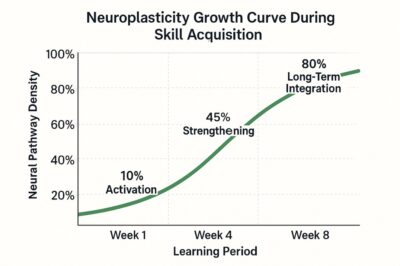
At its core, skill acquisition is both psychological and physiological. When we learn something new, our brain forms neural connections that strengthen through repetition and contextual application. This process, known as neuroplasticity, proves that intelligence isn’t fixed—it’s sculpted by experience and practice.
Each skill we acquire modifies our brain’s architecture, improving efficiency for similar future learning. A person learning a new language, for instance, doesn’t just memorize words—they rewire cognitive circuits for pattern recognition, emotional tone, and memory retrieval. Over time, this neural adaptability compounds, making future skill acquisition faster and more intuitive.
Research in cognitive psychology shows that spacing, feedback, and contextual relevance drastically enhance retention. Instead of cramming, the most effective learners employ deliberate practice: they repeat with reflection, adjust based on results, and connect new skills with existing knowledge.
From Knowledge Consumers to Skill Builders
The shift toward lifelong learning is not about collecting certificates—it’s about building functional adaptability. In the past, expertise was measured by what you knew. In the present and future, it’s measured by how quickly you can learn and apply what’s new.
Modern professionals must move beyond passive consumption toward active construction of skill. The world’s most successful innovators, from engineers to artists, share one trait: they treat learning as a living experiment. Skill acquisition becomes an ongoing process of testing, applying, and refining knowledge, rather than simply storing it.
With artificial intelligence taking over repetitive tasks, the human edge will depend on emotional intelligence, creativity, and cognitive flexibility—traits sharpened through constant skill acquisition. The individuals who learn to learn effectively will become the architects of tomorrow’s industries, shaping the economy through continuous reinvention.
The Role of Technology in Accelerating Skill Acquisition
Digital tools have revolutionized how people acquire skills. Platforms like Coursera, Skillshare, and LinkedIn Learning have democratized access to expert instruction, while gamified systems and virtual reality simulations immerse learners in hands-on experiences.
Artificial intelligence personalizes this further—adaptive learning systems now adjust difficulty, pacing, and style based on individual performance. This evolution turns skill acquisition into a data-driven, customized journey. Learners no longer face a one-size-fits-all curriculum; instead, they experience responsive learning ecosystems that mirror their pace and preferences.
Moreover, social learning communities enable collaboration and accountability. A coder in Tokyo can troubleshoot in real-time with a peer in Berlin, transforming isolated learning into a global dialogue. The internet has thus made skill acquisition borderless and exponentially scalable.
Skill Acquisition and the Future Workforce
The modern labor market rewards agility more than tenure. Employers increasingly prioritize candidates who demonstrate continuous growth rather than static expertise. In fact, studies show that by 2030, nearly 40% of the top in-demand skills will be new compared to today.
This means workers can no longer rely solely on formal education. Instead, skill acquisition through microlearning, apprenticeships, and experiential education becomes essential for staying employable. The ability to pivot—learning new technologies, mastering soft skills, or transitioning industries—will define career longevity.
Companies themselves are transforming into learning ecosystems. Forward-thinking organizations allocate budgets for internal learning programs, virtual mentorship, and AI-powered upskilling platforms. These investments recognize that a culture of skill acquisition doesn’t just boost productivity—it fuels innovation and employee satisfaction.
Overcoming Barriers to Lifelong Skill Acquisition
Despite its importance, skill acquisition faces psychological and structural barriers. Fear of failure, time scarcity, and cognitive overload often prevent adults from pursuing new learning paths. Yet, neuroscience suggests that these barriers are surmountable with reframing and practice.
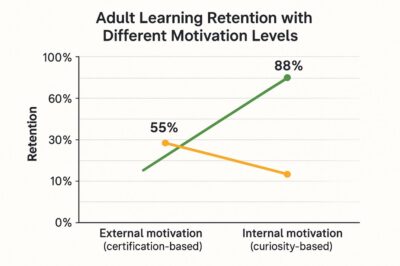
When learners shift from perfectionism to curiosity, they tap into intrinsic motivation. Learning becomes less about proving competence and more about exploring possibilities. Time, once seen as a limitation, becomes an opportunity for micro-learning—short, consistent sessions that build compound knowledge.
Organizations can also dismantle structural barriers by normalizing “learning while working” and rewarding progress rather than just outcomes. The goal is to cultivate cultures where skill acquisition is celebrated, not seen as a remedial effort.
The Ethical and Social Dimensions of Continuous Learning
Beyond personal advancement, skill acquisition carries ethical implications for society. As automation replaces certain roles, unequal access to education could deepen divides between those who can adapt and those who cannot. Ensuring that learning opportunities remain inclusive and affordable becomes a social priority.
Public institutions and private organizations share this responsibility. When skill acquisition is integrated into public education systems and workplace cultures alike, it empowers communities to evolve collectively. In this sense, learning becomes a public good, not a private privilege.
The democratization of education will define the next generation of innovation, with technology serving as both tool and equalizer. If the world continues to prioritize accessibility and inclusivity in skill acquisition, lifelong learning can transform from a privilege into a human right.
Final Words
The future belongs to those who treat learning not as an event, but as an ongoing evolution. Skill acquisition is not a checkbox but a continuum—one that transforms both individual potential and societal resilience.
As industries rise and fall, technologies shift, and cultures merge, the one constant will be humanity’s capacity to learn, unlearn, and relearn. Those who embrace skill acquisition as a way of life will not merely survive change—they will shape it.
The world no longer rewards those who know the most, but those who can learn the fastest, adapt the quickest, and stay curious the longest. In this fluid, ever-changing landscape, lifelong learning powered by skill acquisition is not just the future—it is the only sustainable path forward.

Andrea Balint is a writer and researcher focused on human behavior, workplace psychology, and personal growth. Through her work at CareersMomentum, she explores how mindset, leadership, and emotional intelligence shape modern careers. With a background in communication and HR development, she transforms complex ideas into practical insights that help readers build clarity, confidence, and professional purpose.