
A Human Resources generalist supports the whole employee lifecycle, including hiring coordination, onboarding, benefits support, employee relations, performance management, and basic compliance. If you’re asking what a human resources generalist is, the most straightforward answer is that they handle multiple HR functions instead of specializing in one area.
This guide covers what HR generalists do, where they work, the tools they use, the skills employers expect, and typical career paths.
A human resources generalist handles day-to-day HR across recruiting, onboarding, employee support, benefits coordination, and policy compliance. This article explains core duties, common tools, key skills, and where the role can lead next.
Table of Contents
- Who Human Resources Generalists Are
- What Human Resources Generalists Do
- Work Environment
- How to Become an Human Resources Generalist
- Skills HR Generalists Need
- Pay
- Job Outlook
- Pay
- Career Path
- HR Generalist vs HR Specialist
- Human Resources Generalist Job Titles
- What Makes a Great Human Resources Generalist
- Final Thoughts
Who Human Resources Generalists Are
A human resources generalist is the day-to-day point of contact for HR support across multiple areas, not just one specialty.
They keep core HR processes running smoothly while making sure policies are applied consistently and fairly.
What Human Resources Generalists Do
A human resources generalist keeps core HR processes running across hiring, onboarding, employee support, and policy compliance.
The table below shows the most common responsibilities, the tools often used, and the outcome each duty supports.
| Core duty | Common tools | Outcome |
|---|---|---|
| Recruiting coordination and onboarding | ATS + HRIS, offer templates, onboarding checklists | Faster time-to-productivity and consistent new-hire experience |
| Employee relations and issue intake | Case logs, documentation templates, manager coaching notes | Early conflict resolution and reduced escalation risk |
| Policy support and basic compliance | Handbook, training records, compliance calendars | Consistent policy application and fewer compliance gaps |
| Performance process support | Review cycles, goal templates, calibration notes | Fairer evaluations and clearer expectations |
| Benefits and payroll coordination | Benefit portals, vendor tickets, payroll checklists | Fewer errors and better employee trust in core processes |
| People metrics and basic reporting | HR dashboards, turnover reports, pulse surveys | Actionable signals for retention, workload, and engagement |
Work Environment
HR generalists typically work in office settings, on hybrid schedules, or fully remotely, depending on the organization.
Much of the role is communication-heavy: handling employee inquiries, coordinating with managers, and maintaining accurate documentation.
During hiring cycles, policy updates, or investigations, the workload can spike, and hours may extend beyond a standard workday.
How to Become an Human Resources Generalist
Most Human Resources generalists start with a bachelor’s degree in HR, business, or a related field and build experience through entry-level HR roles.
Common pathways include roles as an HR assistant or coordinator, then moving into a generalist position after demonstrating competence in onboarding, employee support, and basic compliance.
HRIS exposure and strong documentation habits often accelerate promotion, especially in hybrid workplaces.
Skills HR Generalists Need
Human Resources generalists need a mix of people skills and operational discipline to run HR processes consistently.
Clear communication and conflict handling matter most in employee-facing work. On the systems side, generalists are expected to accurately document, adhere to policy, protect sensitive data, and stay organized across multiple workflows.
Basic HRIS fluency and comfort with reporting (turnover, hiring pipeline, absence patterns) are increasingly common requirements.
Pay
Human Resources generalist pay varies by location, industry, and the extent to which the role includes compliance, employee relations, or HRIS ownership.
| Region | Typical annual range | Source type |
|---|---|---|
| United States | $50,000–$90,000 | Job-posting estimates |
| United States | $63,000–$97,000 | Employee-reported percentiles |
| United Kingdom | £33,000–£52,000 | Employee-reported percentiles |
| Benchmark (U.S. HR occupation) | $72,910 median | Government labor stats (median) |
Job Outlook
Demand aligns with overall HR hiring trends and is strongest among growing organizations that need a single person to cover multiple HR functions.
Tools HR Generalists Use
Human Resources generalists use HR systems to track employee records, automate workflows, and ensure consistent processes.
Most teams rely on an HRIS plus an applicant tracking system, along with documentation templates for onboarding, performance cycles, and case notes. Generalists also use survey tools for engagement feedback, calendar and ticketing systems for requests, and reporting dashboards to spot patterns early.
Pay
Human Resources generalist pay varies by location, industry, and the extent to which the role includes employee relations, compliance, and HRIS ownership.
| Region | Typical annual range | Source type |
|---|---|---|
| United States | $50,000–$90,000 | Job-posting estimates |
| United States | $63,000–$97,000 | Employee-reported percentiles |
| United Kingdom | £33,000–£52,000 | Employee-reported percentiles |
| Benchmark (U.S. HR occupation) | $72,910 median | Government labor stats (median) |
Career Path
The Human Resources generalist role often leads to roles such as HR Business Partner, HR Manager, or HR Specialist, with responsibilities in employee relations, recruiting, and compensation.
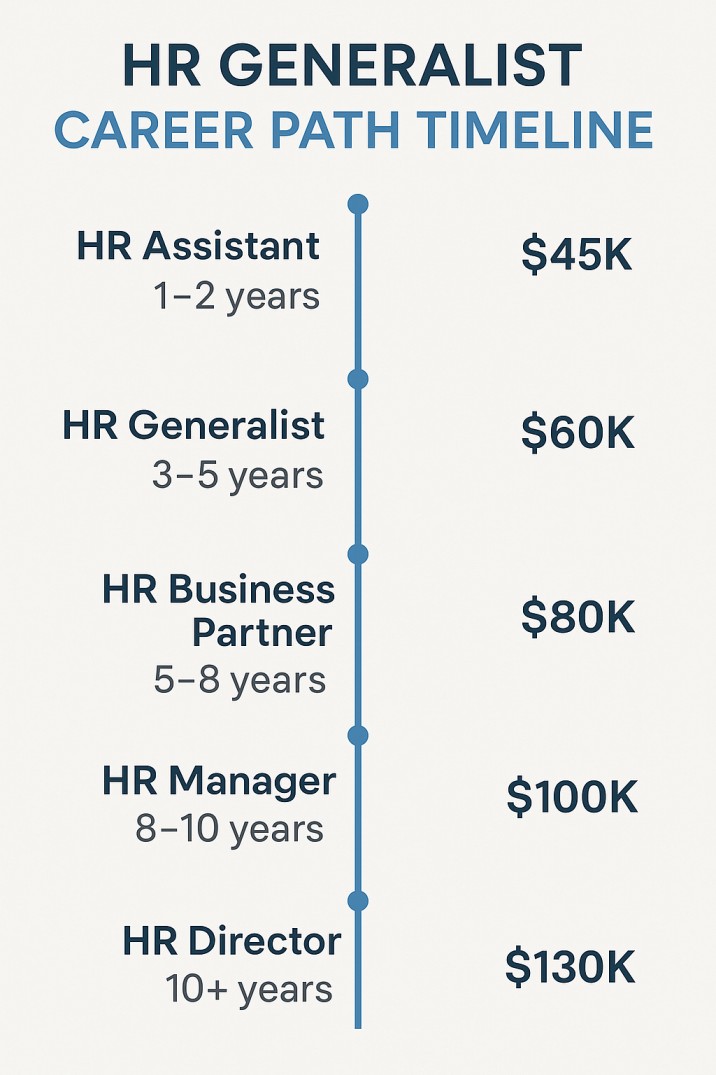
Many generalists move into HRBP roles when they become strong at advising managers and using data to identify risks early.
Others specialize after a few years by choosing the work they like most—culture, compliance, recruiting, or people analytics—while using generalist experience as their foundation.
HR Generalist vs HR Specialist
An HR generalist covers multiple HR areas, while an HR specialist focuses on a single function.
Generalists are usually the day-to-day point of contact for employees and managers across onboarding, policies, and support workflows. Specialists typically own a lane like recruiting, payroll/benefits, compensation, or training, and go deeper on tools, processes, and best practices in that area.
In many companies, generalists keep HR running end-to-end, while specialists build and optimize one part of the system.
Human Resources Generalist Job Titles
Human Resources generalist roles may be titled differently depending on company size and structure.
| Job title | Typical duties |
|---|---|
| HR Generalist | Runs day-to-day HR across onboarding, employee relations, policy support, performance cycles, benefits coordination, and basic reporting. |
| People Operations Generalist | Generalist HR plus employee experience workflows, process improvements, internal comms, and smoother “people systems” across teams. |
| HR Coordinator (generalist-track) | Coordinates hiring logistics, onboarding setup, documentation, HR inbox/tickets, and supports benefits and payroll tasks while learning broader HR. |
| HR Administrator | Maintains employee records, contracts, letters, HRIS updates, compliance documentation, and supports audits and policy rollouts. |
| HR Associate | Handles employee support requests, onboarding/offboarding steps, basic investigations support, training coordination, and manager assistance on policy questions. |
| HR Operations Specialist | Owns HR processes and systems: HRIS workflows, data quality, reporting, payroll/benefits operations, and standardized HR documentation. |
| People & Culture Generalist | Blends core HR (policies, onboarding, employee support) with culture programs, engagement efforts, manager enablement, and values-driven initiatives. |
Standard titles include HR Generalist, People Operations Generalist, HR Coordinator (generalist track), HR Administrator, HR Associate, and HR Operations Specialist.
Some companies also use “People & Culture Generalist” for roles that blend employee experience work with core HR operations.
What Makes a Great Human Resources Generalist
Great Human Resources generalists combine trust-building with process discipline to ensure decisions remain fair and consistent.
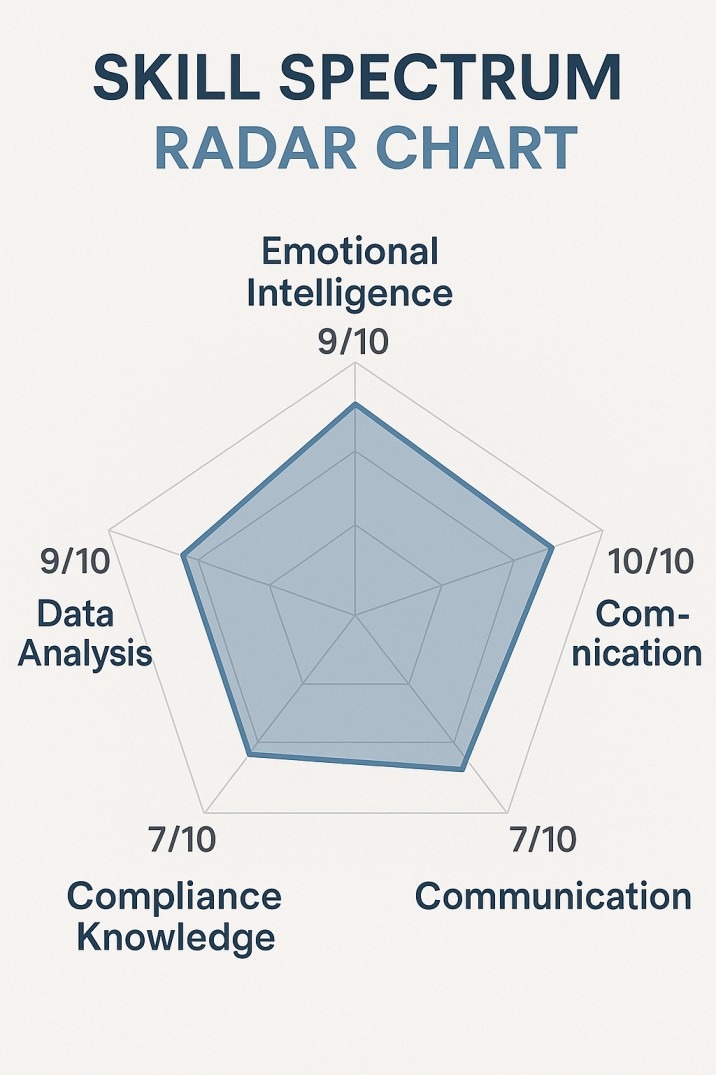
They communicate clearly, document accurately, and handle sensitive issues without escalating conflict. Strong generalists also know when to pause, verify facts, and apply policy consistently, while still treating people with empathy.
When they’re effective, managers feel supported, employees feel heard, and HR problems are resolved early rather than becoming crises.
Human Resources generalists translate policies into clear, workable guidance for managers and employees.
The best ones apply rules consistently while maintaining trust, especially in sensitive or emotionally charged situations.
Final Thoughts
A Human Resources generalist supports the full employee lifecycle by ensuring smooth execution of hiring, onboarding, employee support, and policy compliance.
If you’re exploring this role, focus on strong communication, clean documentation, and HRIS confidence—those three skills open the most doors and set up the fastest growth path.
What is a human resources generalist?
A human resources generalist is an HR professional who supports multiple HR functions, such as onboarding, employee relations, benefits coordination, and policy compliance.
What does an HR generalist do day to day?
Most days include onboarding steps, answering employee questions, documenting requests, supporting managers with policy or performance issues, and coordinating benefits or payroll tasks.
Is an HR generalist the same as an HR specialist?
No. Generalists cover multiple HR areas across the employee lifecycle, while specialists focus deeply on one function like recruiting, compensation, benefits, training, or employee relations.
Do HR generalists handle payroll and benefits?
Many HR generalists coordinate payroll and benefits tasks (inputs, audits, vendor tickets, employee questions), but payroll ownership varies by company size and structure.
What skills matter most for HR generalists?
Clear communication, strong documentation, discretion, conflict handling, and comfort using HRIS tools and basic reporting are the core skills employers look for.
What tools do HR generalists use?
Most use an HRIS plus an ATS, along with onboarding templates, policy documentation, case logs, survey tools, and dashboards for basic HR reporting.
What education do HR generalists need?
Many roles prefer a bachelor’s degree in HR, business, or a related field, but hands-on experience in HR coordination and strong documentation skills can matter just as much.
Do HR generalists need certifications?
Certifications are not always required, but they can help with credibility and promotion, especially for roles that include compliance, employee relations, or policy ownership.
Is HR generalist a good career?
It can be a strong career choice if you like variety, working with both people and process, and building broad HR experience that can lead to HRBP, HR manager, or specialist roles.
Can an HR generalist become an HR Business Partner?
Yes. Many generalists move into HRBP roles after building strong manager-advisory skills, employee relations experience, and comfort using data to spot risk early.
What is the difference between People Ops and HR generalist roles?
People Ops roles often emphasize employee experience and process improvement, while HR generalist roles may lean more toward policies, compliance, and day-to-day HR operations.
What makes a great HR generalist?
Great generalists build trust while applying policy consistently, document clearly, protect confidentiality, and resolve issues early before they escalate.

Andrea Balint is a writer and researcher focused on human behavior, workplace psychology, and personal growth. Through her work at CareersMomentum, she explores how mindset, leadership, and emotional intelligence shape modern careers. With a background in communication and HR development, she transforms complex ideas into practical insights that help readers build clarity, confidence, and professional purpose.