In every thriving company, every high-performing creator, and every seamless system, there’s a silent force dictating success — task completion. It’s easy to talk about goals, strategy, or innovation, but the truth is that progress happens only when tasks are actually finished. Yet, despite its simplicity, task completion remains one of the most underestimated performance metrics in modern workflows.
When teams optimize for speed, automation, and collaboration, they often forget to measure what truly matters — how consistently tasks get done. The hidden story behind every productive workflow isn’t the number of tools you use or how flexible your schedule is. It’s the invisible rhythm of commitment meeting execution, the difference between effort and completion.
The Psychological Power of Task Completion
At its core, task completion satisfies a deep psychological need. Neuroscience studies show that completing a task triggers a dopamine release — the brain’s chemical reward for closure. That’s why checking off an item on your to-do list feels disproportionately satisfying compared to simply making progress. Your brain interprets completion as success, reinforcing focus and motivation for the next challenge.
Modern productivity tools may help track progress, but they also risk fragmenting attention. With constant notifications, switching contexts, and multitasking, many professionals experience what psychologists call the “Zeigarnik effect” — the mental discomfort of unfinished tasks. This effect causes lingering stress that lowers focus and creativity. Task completion, therefore, isn’t just about ticking boxes; it’s about freeing cognitive bandwidth to perform at a higher level.
Task Completion as a Metric of Workflow Efficiency
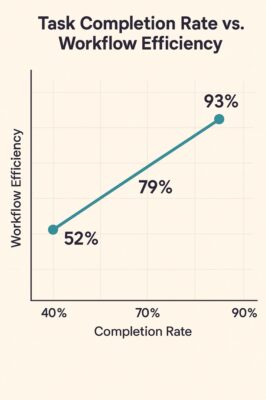
When we talk about productivity metrics, we often measure output in terms of deliverables, deadlines, or time spent. However, task completion gives a more meaningful insight — it reveals whether work translates into results. A workflow with 100 tasks started but only 30 completed is not efficient; it’s fragmented.
Tracking task completion helps identify bottlenecks in process design, communication gaps, or unclear accountability. For example, in team-based environments, completion rates can drop when tasks are assigned vaguely or when too many dependencies stall progress. By contrast, teams that structure their workflows around completion checkpoints tend to operate with greater clarity and momentum.
Why Task Completion Defines Modern Productivity
In the digital age, productivity isn’t about working more — it’s about closing loops faster. Task completion ensures that every cycle of effort translates into measurable value. Teams that excel at closing loops minimize cognitive residue, improve handovers, and maintain consistent progress toward goals.
Moreover, in hybrid and remote work settings, task completion has become the ultimate accountability metric. Without physical supervision, visibility relies on outcomes. Leaders now analyze not just who’s busy, but who’s finishing what they start. This shift from activity-based to completion-based assessment represents the core evolution of modern work culture.
The Hidden Cost of Incomplete Work
Every unfinished task carries an invisible cost — mental fatigue, loss of momentum, and duplication of effort. Studies show that employees waste up to 20% of their time revisiting partially done tasks. That’s not inefficiency; it’s cognitive drain.
When task completion drops, stress levels rise. Teams lose confidence in deliverables, deadlines slip, and overall trust erodes. The perception of busyness replaces genuine progress. Companies that embrace task completion as a performance pillar protect both morale and efficiency.
Data-Driven Task Completion in AI Workflows
With the rise of automation and AI project management tools, task completion is no longer a passive metric — it’s an active optimization signal. AI-driven platforms analyze task timelines, dependencies, and completion velocity to predict delivery success rates. These insights empower leaders to spot weak links before they cause delays.
For instance, platforms like ClickUp or Asana use completion data to forecast future workload distribution. If one department’s task completion rate consistently drops below 60%, it’s an early sign of process overload or unclear role definitions. Over time, machine learning models can adjust task assignment automatically to maintain balance and ensure steady throughput.
Cultural Shifts Around Task Completion
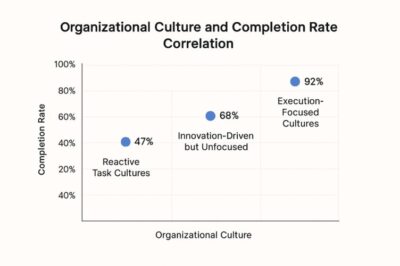
Beyond systems and software, task completion reflects cultural maturity. Organizations that celebrate finishing — not just starting — create environments where follow-through is valued as much as innovation. These cultures balance creativity with discipline.
In high-performance settings, employees learn that completion is the currency of credibility. Leaders who reward closure inspire confidence and autonomy. Conversely, environments obsessed with constant brainstorming but lacking closure often stagnate under the illusion of progress.
Building Workflows Around Completion
A productive workflow doesn’t start with complexity — it starts with clarity. Defining tasks in terms of completion criteria ensures accountability from the beginning. When everyone understands what “done” looks like, task completion becomes a shared goal rather than an individual habit.
Strong workflows integrate micro-deadlines, review cycles, and clear ownership. Each step brings the system closer to closure. That’s how project momentum sustains itself — not by adding more tools, but by ensuring tasks actually end.
Final Words
When projects finish on time, when deliverables meet expectations, and when teams consistently execute their goals — the silent hero is task completion. It’s not glamorous, but it’s the backbone of sustainable growth.
As organizations evolve, measuring completion will become as vital as tracking revenue or engagement. Because every line of code, campaign, or client deliverable begins and ends with one question: Did we complete what we started?
And in that simple, powerful question lies the foundation of every productive workflow.

Andrea Balint is a writer and researcher focused on human behavior, workplace psychology, and personal growth. Through her work at CareersMomentum, she explores how mindset, leadership, and emotional intelligence shape modern careers. With a background in communication and HR development, she transforms complex ideas into practical insights that help readers build clarity, confidence, and professional purpose.