
Growth — personal, professional, or organizational — always begins with understanding oneself. Yet the very foundation of that progress is too often missing. A lack of self awareness doesn’t appear as an obvious flaw. It hides behind confidence, ambition, or busyness, silently eroding the ability to see reality as it is. What makes this trait so destructive is not its visibility, but its invisibility. You can’t fix what you refuse to see.
The modern world celebrates speed, adaptability, and vision, but none of these can thrive without self-understanding. People who operate without awareness of their thoughts, behaviors, and impact unknowingly become their own obstacle. They repeat the same mistakes and misread others’ intentions. Over time, that pattern turns into stagnation — a slow decay that feels like motion, but isn’t progress.
A lack of self awareness quietly sabotages growth by distorting perception and blocking feedback. Without reflection, confidence turns into blindness and progress becomes illusion. True development begins with honest recognition of one’s impact. Awareness restores clarity, reconnects emotion with intention, and transforms stagnation into meaningful, sustainable growth.
The Psychological Trap of Misperception
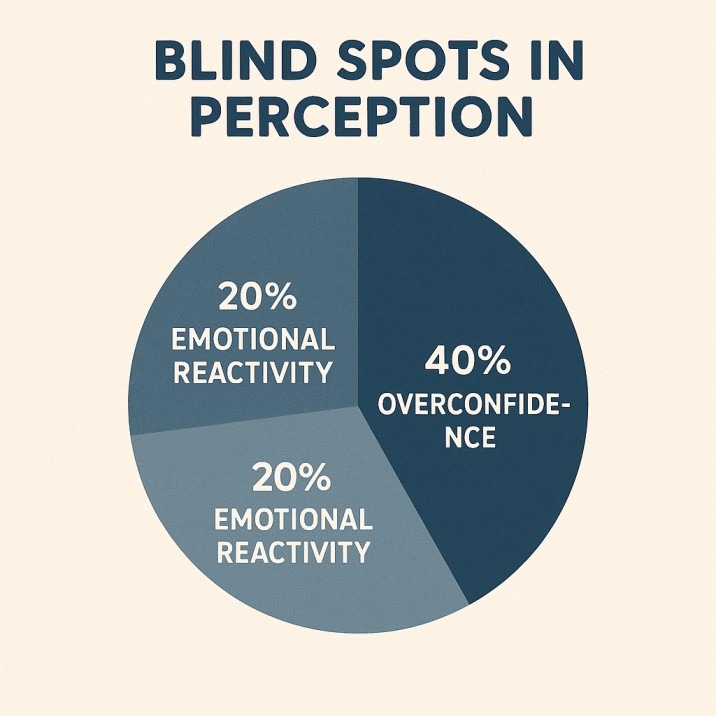
When we talk about a lack of self awareness, we’re really describing a distortion of perception. It’s like trying to navigate a maze with fogged-up glasses — every turn feels uncertain. This blindness leads individuals to overestimate their strengths and underestimate their weaknesses. Psychologists have long noted the Dunning-Kruger effect, where the least skilled people often believe they’re the most competent. Such overconfidence is the classic symptom of low self-awareness, and it breeds a dangerous kind of certainty.
In professional life, this blindness manifests subtly. A manager may believe they are an inspiring leader while their team feels unheard. An employee might assume they’re efficient but actually create bottlenecks. When such patterns go unrecognized, the entire system absorbs the cost. Teams lose morale, communication collapses, and productivity slides. Over time, growth becomes impossible because honest feedback is rejected, and reflection feels unnecessary.
Emotional Blindness and the Cost of Disconnection
At the personal level, the lack of self awareness is even more corrosive. It prevents emotional regulation, distorts relationships, and feeds into cycles of misunderstanding. When someone cannot recognize their own emotional triggers, they externalize blame — assuming others cause their frustrations. Over time, this habit locks them into defensive reactions. Growth, which depends on curiosity and adaptability, becomes replaced with rigidity.
Interestingly, neuroscience supports this link. Self-awareness activates parts of the prefrontal cortex associated with reflection and empathy. When that neural network is underdeveloped through neglect or stress, people default to instinctive behavior — short-term reactions instead of long-term perspective. The result? Decisions that feel good in the moment but sabotage future goals.
Feedback, Ego, and the Wall Against Growth
One of the quietest tragedies of modern work culture is how rarely feedback translates into insight. Many organizations provide annual reviews, 360-degree surveys, and team check-ins. Yet these mechanisms often fail because people listen defensively. When confronted, someone with a lack of self awareness hears threat instead of opportunity. They filter every comment through ego rather than curiosity. What could have been a mirror becomes a shield.
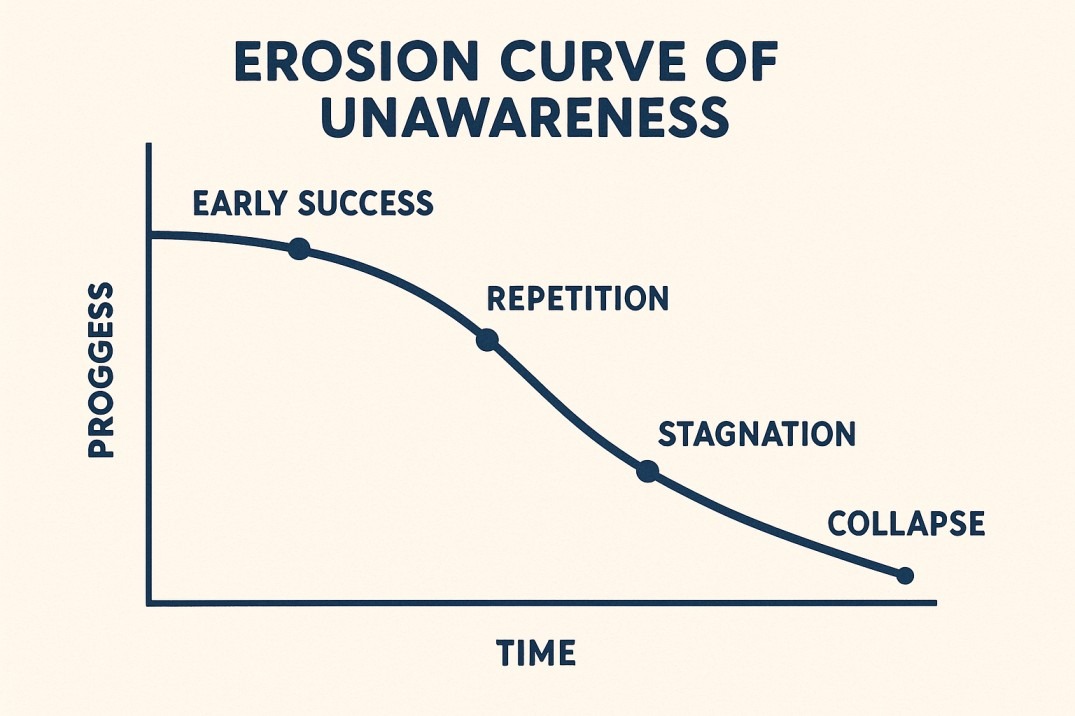
Imagine a talented entrepreneur with this blind spot. They start strong, full of ideas, but refuse to admit missteps. Employees quit quietly, investors lose faith, and eventually, the company’s vision narrows until it reflects only one mind. What began as ambition ends as isolation. That’s how a lack of self awareness destroys growth — not in an explosion, but in slow erosion.
How Overconfidence Masks the Real Problem
Even at a personal scale, this erosion is visible. Relationships break down when one partner constantly deflects accountability. Friendships fade when empathy is replaced by self-importance. Over months and years, that pattern forms emotional isolation — a subtle loneliness that comes from never being truly known, even by oneself.
The paradox of a lack of self awareness is that it often hides behind strength. The most assertive, confident, or decisive individuals may actually be the least introspective. They confuse action with clarity, volume with vision. But without the mirror of self-reflection, their drive becomes misdirected energy — powerful, but blind.
Psychologically, awareness acts like an internal feedback system. It allows us to notice patterns, question motives, and adjust behavior. Without it, the mind becomes an echo chamber. Every assumption sounds true because there’s no internal debate. This lack of internal contrast makes learning impossible. And without learning, growth — personal or professional — is dead in the water.
Organizational Impact of Unawareness
There’s also an organizational dimension to this problem. Companies reflect the collective consciousness of their leaders. A business led by self-aware executives tends to evolve, pivot, and sustain culture through humility. But an organization suffering from a lack of self awareness mirrors the rigidity of its leadership. Decisions become top-down, employees feel unheard, and creative ideas suffocate under hierarchy. The external brand eventually mirrors the internal dysfunction.
In the modern era of data and analytics, this blindness seems ironic. We measure everything — revenue, engagement, performance — except self-insight. Yet research by Korn Ferry and Harvard Business Review repeatedly finds that leaders with high self-awareness outperform their peers by double-digit margins in adaptability and retention metrics. In short, awareness is measurable power.
Resistance: The Real Reason People Don’t Change
One of the subtler aspects of this topic is that lack of self awareness isn’t just ignorance — it’s resistance. People often sense when something about their behavior isn’t working. But admitting it feels like weakness. So they rationalize, project, or minimize. Over time, these coping mechanisms form a protective shell. The more they protect their ego, the less they protect their potential.
To reverse that process, one must tolerate discomfort. Self-awareness grows only through honest confrontation with one’s own flaws. That’s why growth feels painful at first — because it requires dismantling the illusions that once kept us safe. In leadership coaching and therapy alike, that moment of discomfort marks the beginning of transformation.
Awareness as the True Catalyst for Change
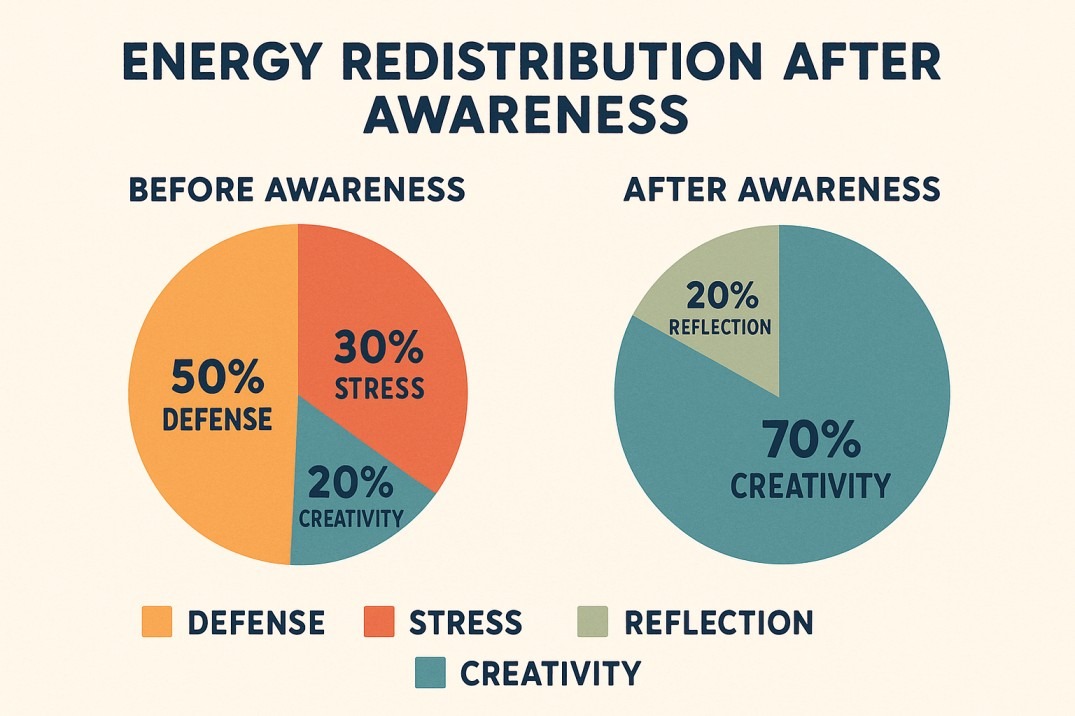
The irony of human growth is that we often chase change externally — new jobs, partners, habits — when the real blockage is internal. A lack of self awareness ensures we keep changing surroundings while remaining the same person. Only when we pause and examine our motives does the cycle break. True progress is never a leap forward; it’s a deepening inward.
Consider how great innovators, artists, and leaders describe their process. They speak of listening — not just to others, but to themselves. That’s awareness in action. It’s the space between thought and reaction, between emotion and expression. And within that space lies the power to evolve consciously, rather than by accident.
So, when people say they feel “stuck,” what they often mean is that they’ve lost sight of themselves. They’ve moved too fast to hear their own feedback. Slowing down feels counterintuitive in a culture obsessed with acceleration, yet it’s the only way forward. Awareness is not introspection for its own sake — it’s strategic clarity. Without it, growth isn’t just hindered; it’s reversed.
In every arena — leadership, art, or daily living — the lack of self awareness is the invisible enemy of evolution. It silences honest feedback, blurs emotional truth, and convinces us that we’re advancing when we’re merely looping. Growth doesn’t demand perfection; it demands recognition. To see oneself clearly is to reclaim control. And that vision, once found, transforms everything it touches.
Conclusion
In the end, every form of growth — emotional, intellectual, or organizational — begins with recognition. A lack of self awareness is like driving in darkness without headlights: movement continues, but direction is lost. The moment we start seeing ourselves clearly, even painfully, we begin to reclaim agency over our lives and work.
Self-awareness isn’t about perfection or self-criticism; it’s about alignment. It’s about ensuring that intention matches impact, that values mirror behavior, and that progress is conscious, not accidental. The deeper we look inward, the higher we rise outward. Growth, after all, doesn’t begin with strategy — it begins with sight.

Andrea Balint is a writer and researcher focused on human behavior, workplace psychology, and personal growth. Through her work at CareersMomentum, she explores how mindset, leadership, and emotional intelligence shape modern careers. With a background in communication and HR development, she transforms complex ideas into practical insights that help readers build clarity, confidence, and professional purpose.